Download
1 / 12
130 likes | 373 Views
This guide outlines essential sterilization processes for dental and medical tools, emphasizing the importance of proper handling and effective equipment like the Hydrim and various types of autoclaves. The initial cleaning involves rinsing implants and soaking them in a chemical solution. The Hydrim system enhances safety and efficiency by minimizing operator exposure to biohazards and ensuring tools are thoroughly cleaned and dried before packaging. We also explore the differences between gravity displacement, positive pressure displacement, and negative pressure displacement autoclaves, highlighting their benefits and drawbacks.

E N D
*We prep all implants used in any given procedure by placing them under running water for about 30sec. *Then we presoak all implants in a chemical bath until the tools are ready to be placed inside the hydrim. Tool preparation and presoak
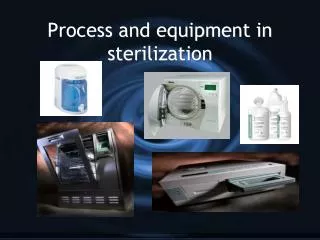
The Hydrim *After the first two steps of tool processing, the hydrum can be useful for the following : *It eliminates the potential dangers and disaster which can arise in tool scrubbing. *It cuts down a large amount of time the operator must be in contact with any potential biohazard *The Hydim also has a dry cycle which ensures your tools are clean and dry before being bagged and sterilized.
Cassette and Chamber Autoclaves *What are the differences in gravity displacement autoclaves. *Such as Type N, Type S, and positive displacement. *What are the benefit and drawbacks?
Gravity displacement autoclaves or Type N. *These autoclave our the most commonly used in the tattoo and piercing community. *The name refers to the way air is removed from the chamber. *This design of autoclave generally has a heating element in the bottom of the autoclave chamber, along with a fill hole that transfers water from a reservoir to the autoclave chamber. *The benefit of this type of autoclave is it's simplicity along with being very cost effective.
Positive Pressure Displacement Autoclave *The positive pressure displacement autoclave improves on the design of a gravity displacement autoclave by creating the steam in a separate internal unit or "steam generator” *The steam needed to displace air builds in a separate chamber which opens the check valve and a pressurized burst of steam enters the autoclave chamber, this resulting in a higher percentage of air from the chamber which decreases autoclave cycle times. *Drawbacks high initial cost and a smaller chamber or cassette
Negative pressure displacement Autoclaves or Type S *The negative pressure displacement unit is able to achieve a highest "Sterility Assurance Level" (SAL) *The main difference in this type of autoclave: is when the chamber is closed a vacuum pump removes all the air form the chamber and then the pressurized steam is injected into the chamber. *These also have filtered dry cycles which allows for the packages to completely dry before entering ambient air. *Drawbacks size of unit and high initial cost
Aquastat and Condensation Cubes • The Aquastat is used to turn tap water into distilled water, while the Condensation Cubes neatly dispose of the waste water from the back of the Statim • Both are relatively cheat and have a great upside. • Simple construction so very durable • Both are self-contained units meaning no wiring and just a little plumbing for the cubes