Understanding Enzyme Activity in Sugar Digestion: Amylase and Starch Interaction
This study explores the enzymatic digestion of starch into glucose by amylase in saliva. The process highlights the substrate (starch) and products (glucose), illustrating how enzymes facilitate chemical reactions. Various tests, including the Benedict test with different solutions (water, starch, saliva, saliva + starch), evaluate sugar presence and the effectiveness of enzymes. The notes also detail the significance of temperature in enzyme activity, especially regarding warm and boiling water. Understanding these principles sheds light on biochemical processes important for digestion.

Understanding Enzyme Activity in Sugar Digestion: Amylase and Starch Interaction
E N D
Presentation Transcript
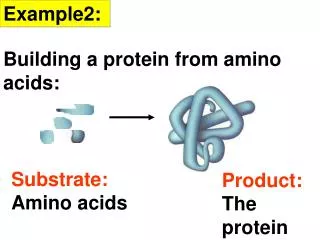
Example2: Building a protein from amino acids: Substrate: Amino acids Product: The protein
Chemical reaction: A process where atoms and bonds are re-arranged. We define: Beginning substance(s) Ending substances Reactant(s) Products Substrate(s) Notes
Consider the Benedict result from the four test tubes: (1. water, 2. starch, 3. saliva, 4. saliva + starch) 1) Which one showed presence of sugar? Why not in the others? 2) What was the purpose of dipping in warm water? 3) What was the purpose of the boiling water in the end?
Example1: Glucose Starch Digestion by saliva Amylase Substrate: Starch (Amylose) Products: Glucose molecules
Process of Enzyme Action: Reactants Substrates Products s l o w fast! Enzyme
Process of Enzyme Action: complex Product release Binding to Active Site Product release
Process of Enzyme Action: Notes Step 1: Enzyme binds substrate Step 2: Enzyme and Substrate form a complex. Step 3: Changes occur in substrate. Step 4: Release of products, enzyme can start again. fast!
Process of Enzyme Action: 3. Product Release1 1. Binding to Active Site 2. Temporary Enzyme-Substrate Complex 4. Product Release2 Notes
Enzyme Animation Starch digestion Course Website
Amylase (enzyme) Amylose / Starch (Substrate)
What is the relationship between: • enzyme, protein • enzyme, amino acids • amylase, enzyme • protein, amino acids • 2) Arrange the four terms in a brace map, using ‘our’ arrows. enzyme, protein, amino acids, amylase. 09.07.11 Journal 2