Evaluating Fiscal Policy Effectiveness in Oregon: Insights from the Economic Forum
On October 22, 2009, Mark Thoma from the University of Oregon discussed the effectiveness of fiscal policy, exploring its components: government spending and taxes. He examined how fiscal policy impacts the economy through multiplier effects, potential pitfalls like savings from tax cuts, and the timing of stimulus packages. Thoma also analyzed employment and GDP changes to assess if additional stimulus is necessary. Despite signs of improvement, he emphasized the potential for continued economic struggles and the pressing need for more targeted fiscal interventions for recovery.

Evaluating Fiscal Policy Effectiveness in Oregon: Insights from the Economic Forum
E N D
Presentation Transcript
Fiscal Policy Oregon Economic Forum October 22, 2009 Mark Thoma Department of Economics University of Oregon Has it worked? Is more needed?
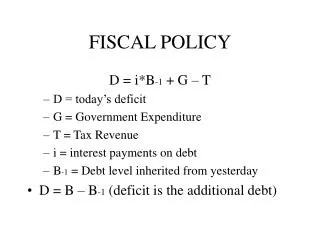
What is Fiscal Policy? • A text book definition would be something like: A plan for government spending and taxes designed to achieve some goal. • So there are two components, spending (the government buying goods and services) and taxes (net of transfers).
How Does Fiscal Policy Work? • Multiplier effects • Government spending and tax multipliers can differ • Speed of impact • Size of impact • Effects on economic growth • Graphs of Disposable Income and Government Spending
Disposable Personal Income1990:M1 – 2009:M8, Nominal First Stimulus Package Second Stimulus Package
Disposable Personal Income1990:M1 – 2009:M8, Real First Stimulus Package Second Stimulus Package
Federal Government Expenditures1990:Q1-2009:Q2 Second Stimulus Package
Multiplier Estimates(Romer and Bernstein, “The Job Impact of the ARRA,” May 2009)
What Can Go Wrong? • Tax Cuts Saved, Not Spent • Stimulus not large enough • Bad Timing • Private Activity Crowded Out • Deficit Not Repaid when Things Improve
Has it worked? • To assess whether it has worked, need a baseline (what would have happened without policy) • What is the baseline? • We don’t know, it must be estimated • Estimates are model dependent • Evidence
Other Evidence? • Countries with larger stimulus packages grew faster in 2009Q2 • States that spent more lost fewer jobs • Estimated effects • Cash for Clunkers • Incentives to purchase new homes
Is More Stimulus Needed? • Things are looking better, but a double dip or very slow return to trend for GDP is not out of the question. • The recovery of employment is likely to be even slower. • More stimulus, especially if it generates jobs quickly, would likely boost the recovery. • So yes, more is needed, but we needed it six months ago. Given lags, harder to justify now. • In any case, major policy change is unlikely.
Unemployment Lags Output How Much Higher? Delayed Peaks
Unemployment Since 1990 Unemployment hasn’t turned the corner yet Delayed Peaks in 90-91 and 2001 recessions
Long-Term Unemployment High Long-Term Unemployment
Employment to Population Ratio Low Employment to Population Ratio
Private Employment Employment is Falling
Average Weekly Hours: Private Industry Average Hours are Falling
Conclude • Some evidence that fiscal policy has worked • But too early to say anything conclusive • Things look better, but not out of the woods yet • Speed of recovery and, importantly, employment would likely improve with more stimulus • Politically unlikely