Understanding Persuasion: The Dynamics of Influence and Choice
This comprehensive guide explores the multifaceted nature of persuasion and its role in shaping attitudes and behaviors. Delving into key concepts like compliance, internalization, and reactance, it delineates between free choice and coercion. The text examines Kelman's types of persuasion and highlights influential factors such as ego involvement and the latitude of acceptance. With basic propositions emphasizing the importance of receiver ownership and consistency, this resource is essential for anyone looking to enhance their communication skills and understand the psychology behind influence.

Understanding Persuasion: The Dynamics of Influence and Choice
E N D
Presentation Transcript
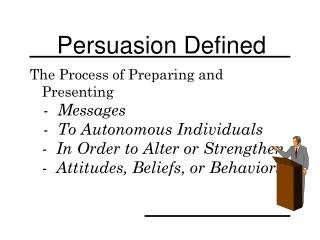
Persuasion Defined Communication intended to influence choice
Aware Determined Free Choice Unaware Coercion Persuasion
Behavioral Outcomes Response Shaping Response Reinforcement Response Changing
Attitude-Behavior Behavior - Behavior Attitude Specificity Attitude Intensity Attitude Salience Multi-component Models
Kelman’s Types of Persuasion Internalization Identification Compliance -- Obedience
Reactance Lattitude of Acceptance Lattitude of Rejection Clerk Effect Persuasion Anchor Latt. NC Social Judgment Theory
Lattitude of Rejection LattAccpt LattNC Anchor Social Judgment Theory Ego Involvement
Types of Involvement Ego Involvement Issue Involvement Personal Involvement
A Model of Persuasion Involvement + - + Attitude - Opponents Team Members Neutrals Apathy Negatives Supporters Detractors Reserved Disengaged
Involvement + - + Attitude - Goal Apathy
Involvement Goal + - Apathy + Attitude -
A Few Basic Persuasion Propositions • Persuasion must be owned by the receiver • People prefer to change a negative to a positive • People prefer to change attitudes about objects than people • Messages that help people maintain or restore consistency are more persuasive
The most common strategy? REQUEST The number of strategies commonly used? 1