Download
1 / 16
160 likes | 266 Views
This analysis explores various language forms and features (LFF) used in advertisements and their psychological effects on audiences. From onomatopoeia that creates sound resonance, to personification that enhances product strength imagery, these techniques engage consumers effectively. Puns, alliteration, and assonance create memorable slogans, while hyperboles exaggerate product qualities. Techniques like repetition and innuendo cleverly capture attention and instill humor. Understanding these LFF helps decode advertisements' persuasive power and their influence on consumer perception.

E N D
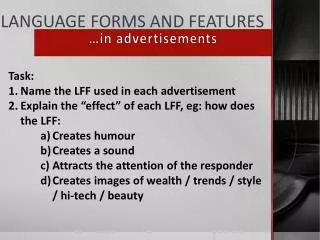
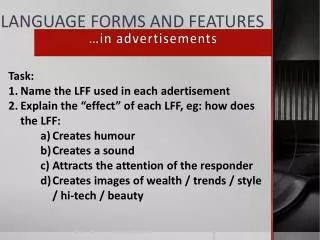
LANGUAGE FORMS AND FEATURES • Task: • Name the LFF used in each adertisement • Explain the “effect” of each LFF, eg: how does the LFF: • Creates humour • Creates a sound • Attracts the attention of the responder • Creates images of wealth / trends / style / hi-tech / beauty …in advertisements
Onomatopoeia …this creates a sound which echoes the sound of drinking the COKE
PERSONIFICATION and slang …the personification creates a clever image of the pavement being afraid of the power of the boots. This makes the boots seems extra strong!
PUN (double entendre) & Assonance …the pun creates interest because “anything goes” can mean two different things. It can mean you can ‘do’ anything in the shoes and also that you can ‘wear’ anything with the shoes. It’s clever use of language
REPETITION & pun …the repetition of “work” and out” creates a pun which is clever and attracts the reader’s attention. “Work-out” refers to the exercise and “work out” refers to achieving success.
ALLITERATION(& ASSONANCE) …the alliteration is catchy and creates an interesting rhythm to the slogan of the ad.
HYPERBOLE …hyperbole of “lightest ever” creates the exaggerated idea that the shoe is very, very light in weight
ASSONANCE …the assonance creates a sound which makes the slogan easy to read and to say. This makes the simple message of the slogan easy to remember.
INNUENDO (double -entendre) …the pun of “a pair” creates humour because it’s suggesting that “the pair” is not simpley the pair of boots being advertised. The pun also creates masculine, tough and strong image of the people who would wear the boots.
ALLITERATION …the alliteration is catchy and creates an interesting rhythm to the slogan of the ad.
PUN RHYME & PERSONIFICATION RHYME …the rhyme is catchy and easy to remember. The rhyme allows the message to get ‘stuck’ in the reader’s mind.
SIBILANCE PUN …the sibilance is catchy and creates a simple and easy sound to the slogan of the ad.
HYPERBOLE & ALLUSION