Understanding the Integumentary System: Accessory Structures and Their Functions
The integumentary system includes essential accessory structures, such as nails, hair follicles, and skin glands. Nails provide a protective covering on fingers and toes, with growth from the nail bed and lunula. Hair follicles are responsible for hair growth, with cells in the hair bulb dividing and pushing older cells up. Skin glands, including sebaceous and sweat glands, play vital roles in maintaining skin and hair health by secreting oils and sweat. This summary explores their structure, function, and significance in overall health.


Understanding the Integumentary System: Accessory Structures and Their Functions
E N D
Presentation Transcript
Integumentary System Accessory Structures
Accessory structures • Nails, hair follicles, skin glands
Nails • Protective covering on the ends of fingers & toes • Nail plate (keratinized cells) • Nail bed • Lunula • Cells divide at lunula, pushing older cells toward tip of nail
Q. What is the most actively growing region of the nail? • A. Lunula
Fun Nail Facts • Nail appearance mirrors health. • Bluish nail beds may indicate a circulatory problem • White nail beds may be due to anemia • A dark spot not related to injury may be melanoma • Horizontal furrows may indicate a period of illness or malnutrition
Hair Follicles • Hair grows from a tube-like depression called a hair follicle • Hair root – under the skin surface • Hair bulb – where cells are dividing • New cells push older cells up, they be come keratinized and die (this is the part you see!)
Hair Follicles • Losing 20-100 hairs a day is normal! • A hair grows for 2-6 years then takes a break for 2-3 months • When a new hair begins to form in this follicle, the old one is pushed out
Q. What is the area called where hair is growing? • A. Hair bulb
Hair follicle • Arrectorpili muscle is attached to each follicle • When a person is cold, these muscles contract, causing hair to stand straight up (goose bumps)
Hair Follicles • Hair color • Genes determine what type and how much pigment is produced by melanocytes in the follicle • Eumelanin – brownish/black • Pheomelanin – red/yellow
Q. What causes goose bumps? • A. The hair standing on end is caused by the arrectorpili muscle contracting.
Skin Glands • Sebaceous glands – usually associated with hair follicles • Secrete fatty material called sebum • Helps hair and skin soft, pliable, and waterproof
Skin Glands • Sweat glands – coils down deep into dermis or subcutaneous layer • Eccrine glands – most common • Respond to elevated body temperature • Forehead, neck, back, palms and soles • Apocrine glands – (smelly sweat) • Respond to emotions, pain, and being frightened • Armpits and groin
Skin Glands • Specialized sweat glands • Ceruminous glands: ear wax • Mammary glands: milk
Q. What is the function of sebaceous glands? • A. Secrete sebum to keep hair and skin soft, pliable, and waterproof
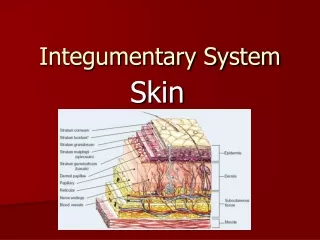
Word Bank for Labeling • Hair shaft • Hair follicle • Sebaceous gland • Dermis • Subcutaneous tissue • Arrectorpili muscle • Sweat gland • Blood vessels • Dpidermis