Download
1 / 1
10 likes | 115 Views
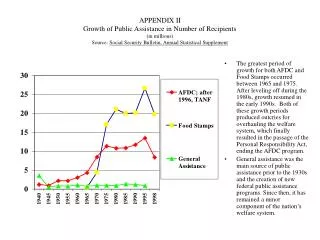
This analysis explores the growth of public assistance recipients from 1965 to present, highlighting a significant surge in assistance programs like AFDC and Food Stamps during the 1965-1975 period. After a plateau in the 1980s, growth resumed in the early 1990s, leading to calls for welfare reform. These reforms culminated in the Personal Responsibility Act, which abolished AFDC. Additionally, it examines the historical role of general assistance before the establishment of federal programs in the 1930s, noting its diminished significance in today’s welfare landscape.

E N D
APPENDIX IIGrowth of Public Assistance in Number of Recipients(in millions)Source: Social Security Bulletin, Annual Statistical Supplement • The greatest period of growth for both AFDC and Food Stamps occurred between 1965 and 1975. After leveling off during the 1980s, growth resumed in the early 1990s. Both of these growth periods produced outcries for overhauling the welfare system, which finally resulted in the passage of the Personal Responsibility Act, ending the AFDC program. • General assistance was the main source of public assistance prior to the 1930s and the creation of new federal public assistance programs. Since then, it has remained a minor component of the nation’s welfare system.