Download
1 / 10
100 likes | 205 Views
Addressing inconsistencies in evaluation requirements for living donors to improve the process and align with kidney donation standards, based on Joint Societies Steering Committee recommendations.

E N D
Proposal To Modify Existing or Establish New Requirements for the Psychosocial and Medical Evaluation of all Living Donors Living Donor Committee Spring 2014
The Problem • OPTN policy has inconsistent requirements for psychosocial and medical evaluation of living donors • Kidney donor recovery hospitals must follow OPTN policies • Liver donor recovery hospitals must develop and follow center-specific protocols • Hospitals performing living lung, intestine or pancreas donor recovery are not required to follow OPTN policy or develop and follow center-specific protocols
Goal of the Proposal • Establish standardized psychosocial and medical evaluation requirements for all types of living donors that mirror existing requirements for living kidney donors • Improve the medical evaluation process for all future living donors
How the Proposal will Achieve its Goal • Standardization of the psychosocial and medical evaluation process for all living donors
Additional Background • Proposed requirements are based on recommendations from a Joint Societies Steering Committee • Committee representation from: • American Society of Transplantation (AST); • American Society of Transplant Surgeons (ASTS); • North American Transplant Coordinators Organization (NATCO)
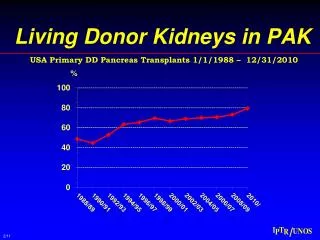
Supporting EvidenceLiving Donors in US by Volume and Type of Donor
Proposal Summary • DTAC recommended minor changes to the required infectious disease testing • All references to “potential living donor” would be changed to read “living donor” • The majority of existing psychosocial and medical evaluation requirements for living kidney donors would be extended to all categories of living donors • No new requirements for living kidney donors
Proposal Summary • New living liver donor medical evaluation requirements are provided in Table 14-8 • New living liver donors exclusion criteria include: • HCV RNA positive, HBsAg positive • Donors with ZZ, Z-null, null-null and S-null alpha-1-antitrypsinphenotypes and untype-able phenotypes • Expected donor remnant volume less than 30% of native liver volume • Prior living liver donor
What Members will Need to Do • Living donor recovery centers must follow new policies for the psychosocial and medical evaluation of living donors
Questions? • Christie Thomas, M.D. Committee Chairchristie-thomas@uiowa.edu • Name Region # Representativeemail address • Lee Bolton Committee Liaisonlee.bolton@unos.org