Climate Change Adaptation Workshop: Highways & Transportation Risk Management
80 likes | 191 Views
This workshop aims to enhance understanding of climate change risks in Highways & Transportation, develop detailed risk assessments, and prioritize management options. Topics include risk identification, existing management assessment, and future risk planning. Learn how to prioritize risks based on likelihood and impact scores, and address challenges like asset deterioration and extreme weather events.


Climate Change Adaptation Workshop: Highways & Transportation Risk Management
E N D
Presentation Transcript
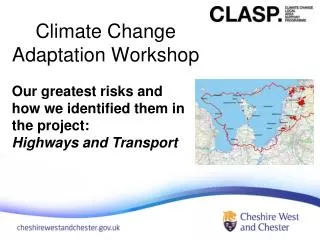
Climate Change Adaptation Workshop Our greatest risks and how we identified them in the project: Highways and Transport
The WorkshopAims:- To increase understanding of Climate Change risks, the risk management process and the adaptation actions required for Highways & Transportation- To have worked through the process to reach a detailed risk assessment and management plan for the most significant risks.LCLIP and Case StudiesCWAC Risk Assessment MethodologyWorkshop 1 – Identifying & Quantifying the RisksWorkshop 2 – Assessing Existing Risk Management PlansWorkshop 3 – Identifying Risk Management Options
Scoring • Two scores Current - where you are now (with existing controls) Target - where you will be (with proposed actions) • Risk Score = Likelihood x Impact Likelihood of occurrence happening Impact if it does occur • Scores are 1(low) to 4 (high) • It is the relative scores that are important not the absolute
Prioritising Risks Housekeeping These risks have a high likelihood of happening do lower impact; they require routine management Primary These risks have high impact and likelihood; these will require primary attention Likelihood Contingency These risks have high impact but lower likelihood; they are catastrophic events Non threatening LOW Impact HIGH
Deterioration of Highways Assets: roads bridges etc. • Risk from maintenance: lack of and increasing need, inspections • Impact from weather events, especially interacting events • Increased accidents etc • Related consequences: Ground shrinkage, subsidence: landslides etc caused by drought and lower water tables Identifying the Risks:
More Risks: Knowledge • Knowledge of vulnerabilities, internally and externally • Incomplete assets understanding • Flood mapping data • Surface Water Management Plans • Information held by United Utilities, Env Agency, Emergency Services etc.
Long Term Risks • Local Development Plan: future development: industry, housing, critical infrastructure etc. • Local Transport Plan 3 • Existing Areas at risk: major sites Sealand Road Industrial/ Retail • Over 1,700 businesses in Cheshire & Warrington are at risk of 1:100 year flooding
Next Steps • Report to Director • Action plan • Ownership/ responsibilities • Member engagement • Risk Management session • Presentation to groups • Budget implications