Space Considerations in Design: Maximizing Object Relationships
Understand the importance of space in design, both in two and three dimensions. Explore positive and negative space, size considerations, and illusionary techniques for creating depth in your visuals.

Space Considerations in Design: Maximizing Object Relationships
E N D
Presentation Transcript
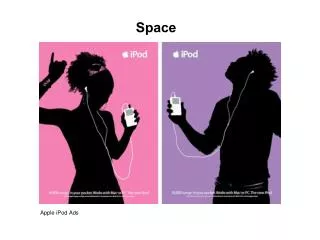
Space • Apple iPod Ads
Space • is the size, scale, and relationship between objects in both two & three dimensions
Space involves • Format (i.e. size, scale, and presentation) • Relationships among objects and the areas surrounding them: positive and negative space • Perceived third dimension: illusionary space
Space Considerations Size of media object in relation to display size (width & height) Monitor resolutions (not the same as monitor size) for media objects • Format = size, scale, & presentation
Space Considerations • An image that takes up the whole space allows the viewer’s eye to wander around the image • An image that takes up a tiny amount of space draws attention to itself
Positive & Negative Space • Relationships among objects and the areas surrounding them • Positive space are parts of the image are perceived to be solid, such as an object (re: volume) • Negative space is everything else
Negative space • is not “left over” space but can enhance your design
Working with Negative Space • The use of texture for filling negative space with the perception of volume; limit use of texture when working with smart devices
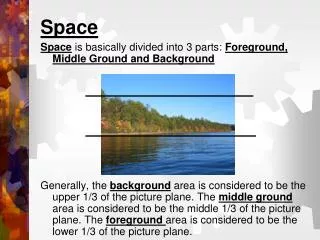
Illusionary Space • Create the illusion of a third dimension by varying placement: lower = closer
Illusionary Space • The illusion of a third dimension is created by using lighter or purer colors for foreground objects • Background objects seem less sharp or distinct than foreground objects