
Understanding Calculation Periods: Initial and Final Stubs Explained
This guide provides clarity on the structure of calculation periods, specifically focusing on the initial and final stub calculation periods. It discusses the significance of key dates such as the first calculation period start date, effective date, and termination date. By understanding these components, one can effectively manage and report financial data according to specified calculation periods. With clear definitions and examples, this resource is essential for financial analysts and anyone dealing with periodic calculation frameworks.

Understanding Calculation Periods: Initial and Final Stubs Explained
E N D
Presentation Transcript
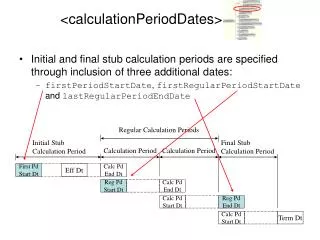
Regular Calculation Periods Initial Stub Calculation Period Final Stub Calculation Period Calculation Period Calculation Period First Pd Start Dt Eff Dt Calc Pd End Dt Calc Pd End Dt Reg Pd Start Dt Calc Pd Start Dt Reg Pd End Dt Calc Pd Start Dt Term Dt <calculationPeriodDates> (2) • Initial and final stub calculation periods are specified through inclusion of three additional dates: • firstPeriodStartDate, firstRegularPeriodStartDate and lastRegularPeriodEndDate