BLAMING GOD
Disasters often lead individuals to seek answers, sometimes resulting in blaming God. This piece explores common reactions, such as cursing or distancing oneself from God, and contrasts these with biblical examples of responses to adversity. We examine both negative and positive reactions, emphasizing the importance of recognizing one's need for God, the consequences of sin, and His sovereignty. The text urges readers to reflect on their responses to suffering and suggests that blaming God might not lead to healing or clarity.

BLAMING GOD
E N D
Presentation Transcript
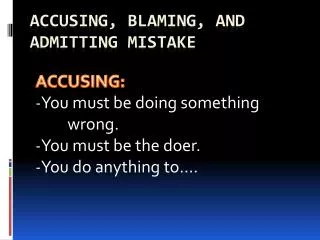
COMMON REACTIONS TO DISASTERS • Blame God • Curse God • Distance oneself from God
BAD REACTIONS IN THE BIBLE • Adam (Gen. 3:12) • Satan (Job 1:11) • Job’s wife (Job. 2:9) • King of Israel (II Kings 6:32-33) • The people of Israel (Is. 8:21) • Revelation 16:8-9,10-11,17-21
ON THE OTHER HAND • Nebuchadnezzar glorified God (Dan. 4:34-35) • Rev. 14:7 • Rev. 11:13
WHY BLAME GOD? • Feel better thinking someone else is to blame? • Feel better as a victim of an injustice? • But will that make anything better (Amos 4:6-13)?
REASONS NOT TO BLAME GOD • Recognize your need for God (Deut. 8:3) • Recognize the consequence of sin (Josh. 7:6-13; Lev. 10:1-3) • Recognize the call to change – and the love that motivates it (II Pet. 3:9; Rev. 2:21) • Recognize the restraint of God (Mt. 24:22; Ps. 78:38-39) • Recognize the sovereignty of God (Job. 2:10; I Tim. 6:15; Rom. 9:20-21)