Download
1 / 29
360 likes | 833 Views
This guide explores the cow's mammary system, detailing its anatomy and function. The udder consists of four quarters, each with a teat for milk extraction. Alveoli within the udder produce milk using materials supplied by blood. We discuss the milk let-down process, which is triggered by sensory stimuli such as udder washing or the sight of a calf, leading to the release of oxytocin from the pituitary gland. Regular milking is crucial, as pressure builds up in the udder, affecting milk production. Also covered are mastitis symptoms, treatment, and the importance of maintaining milking equipment.

E N D
Objectives • Identify the parts of the udder. • Describe the function of the cow’s udder. • Describe milk let-down and the processes of that.
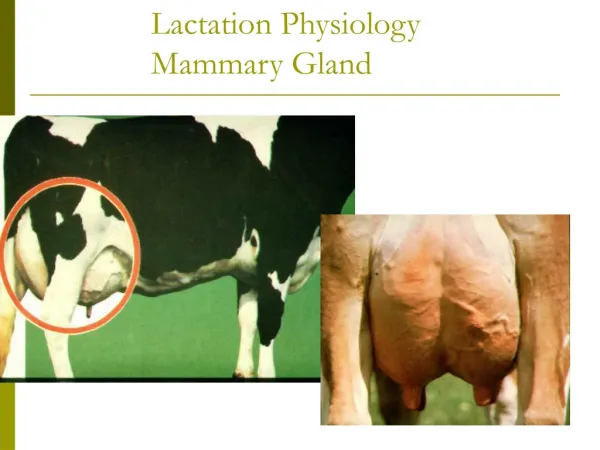
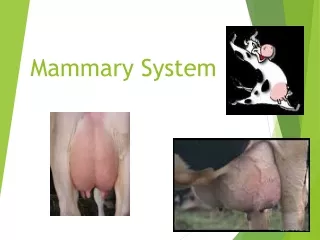
Parts of the udder • Made up of 4 glands called quarters • Each quarter has a teat that provides an outlet for milk
So..what makes the milk? • Udders contain alveoli that manufacture milk • Blood carries all the raw materials to the alveoli • Each alveoli contains cavities for milk
Parts of the Udder • Teats • Contain a small opening called “streak canal” • A narrow streak canal and strong muscle=cow that is harder to milk • A wide streak canal and weak muscle=easy to milk but can leak when udder is full
Milking – by hand, machine, or calf • Squeeze the teat from top to bottom • Machine works in the same way with a vacuum action
So what are the parts? • Practice naming all the parts with a partner • Also discuss what they do • After, we’ll split into four teams and have a “contest” to see who can name them
What do udders do? • Manufacture milk • Store milk until cow is milked or calf nurses
Milk Let-Down • Process when cow responds to a conditioned reflex to sensory stimuli • Stimuli: an event that promotes a response either consciously or unconsciously
Milk Let-Down • Stimuli can be a number of things and often in combination: • Washing and/or touching of the udder • Sight of a calf • Sound of a milk machine • This triggers a response in the cow to release oxytocin
What are some of our responses to stimuli? • Getting your books out at the beginning of class when the bell rings • Shutting off your alarm in the morning • Throwing that perfect loop, pitch, etc. • Hunger at the smell of food • Fear at the sight of heights, spiders, snakes, etc.
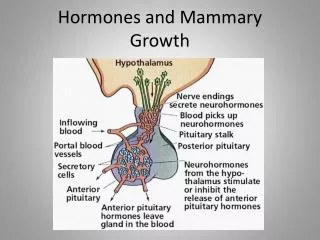
Oxytocin and Milk Let-Down • With stimuli, the pituitary gland releases the hormone oxytocin • What are human hormones? • Do humans have oxytocin? • This is carried to the udders through the blood
Oxytocin – what it does • Causes muscle fibers to squeeze milk from the alveoli into the gland cistern • Milk Let-Down must occur before milk can successfully be removed from the udder • Oxytocin effect lasts about 5-7 minutes
The Big Picture • Udders produce milk all the time and pressure builds in the udders with milk storage • As pressure increases=production decreases so regular milking is important • About 80% of the milk is taken at each milking • Cows will dry up sooner if not enough milk is taken
Things to look for with the mammary system Mastitis: Symptoms: Udders will be Swollen Hot to the touch Red Abnormal Milk (lumpy, contains blood) • Inflammation of the mammary gland caused by bacteria • Disease is followed by an infection • Usually only affects one quarter
Treating Mastitis • Identify the bacteria that caused it • Maintain Milking Equipment • Use approved mastitis medications • Treat as quickly as possible
Review • What are the parts of the udder? • What do udders do? • What is oxytocin? • How much milk is taken after each milking?