Solid Waste
Learn about various solid waste disposal methods including landfills, incineration, and recycling to reduce environmental impact. Explore ways to minimize waste through the principles of reduce, reuse, and recycle.

Solid Waste
E N D
Presentation Transcript
Waste Disposal • Municipal solid waste—waste materials from homes, businesses and other parts of the community • Other solid waste comes from construction debris and certain agricultural and industrial wastes.
Waste Disposal • Three methods of handling solid waste: • Bury it • Burn it • Recycle it
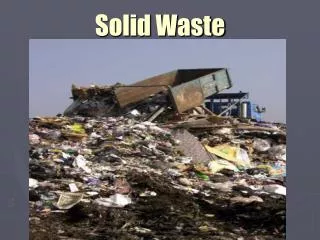
Waste Disposal • Landfills • Open dumps were used until relatively recently. (1976) • Leachate is a polluted liquid made when rainwater dissolves chemicals • Sanitary landfills hold municipal solid waste, construction debris, and some types of agricultural and industrial waste • They have plastic liners and are capped with clay to prevent rainwater from entering.
Waste Disposal • Incineration • Burning of solid waste • Do not take up much space • Do not pose a risk of polluting groundwater • Waste-to-energy plants • Use heat to produce electricity • Release some pollution into the air • Some waste still remains • More expensive to build
Recycling • Biodegradable • A substance that can be broken down and recycled by bacteria
Recycling • Metals • Iron and aluminum can be melted and reused • Glass • Melted to make new glass containers, fiberglass, bricks, tiles and reflective paints
Recycling • Paper • Pulp is a thick liquid made from wood, and recycled paper can be turned into pulp, also • Plastic • Made from resins left over from petroleum products • Can be heated, stretched, and molded into plastic products
Solid Waste Management • Reduce • Reuse • Recycle