Introduction
50 likes | 181 Views
This presentation by Erik Segerdell at the RCN Meeting on February 25, 2011, focuses on the Xenopus Anatomy Ontology (XAO), which details the anatomy and development of the African frog, Xenopus. Used in annotating gene expression patterns in Xenbase, this ontology is part of the OBO Foundry and is structured according to the Common Anatomy Reference Ontology (CARO). Key efforts involve coordinating existing terminologies, enhancing genotype and phenotype representation, and supporting the development of ontologies through best practice advisories and a 'help desk' for new ontology groups.


Introduction
E N D
Presentation Transcript
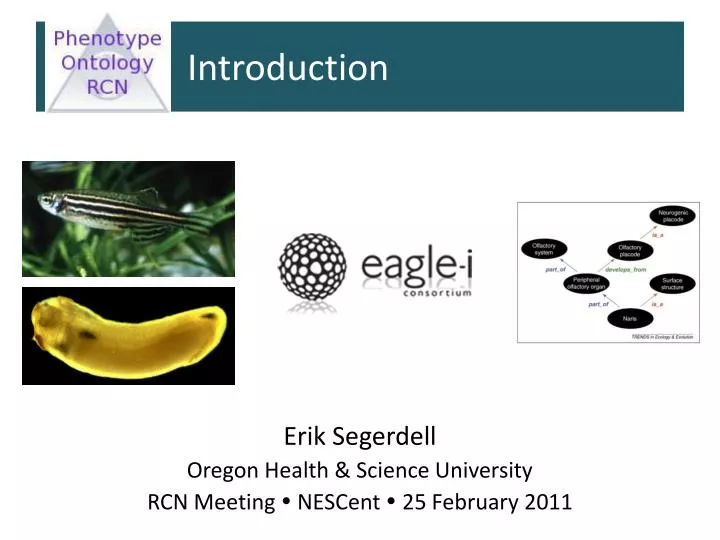
Introduction Erik Segerdell Oregon Health & Science University RCN Meeting NESCent 25 February 2011
Xenopus Anatomy Ontology • XAO describes the anatomy and development of the African frog Xenopus • Used to annotate and search for gene expression patterns in Xenbase (www.xenbase.org) • OBO Foundry ontology, edited in OBO-Edit • Anatomical systems, cell and tissue types classified according to Common Anatomy Reference Ontology (CARO) • Lineage of tissues represented by develops from relationships, start and end stages
eagle-i • Eagle-i: a prototype of a biomedical research resource discovery network • Data model designed in CMAP, implemented in Protégé • Re-use/coordination of existing terminologies • Upcoming challenges: enhancement of genotype and phenotype representation dx.doi.org/10.1038/npre.2010.5176.1
RCN Ontology Coordination • Help integrate ontologies at a high level as per the needs of the working groups and recommendations of the Advisory Board • Advise on best practices • Provide a ‘help desk’ function to new groups who are developing ontologies • Help with RCN website administration