Imagine you're in the middle of your favorite show, and right at the big moment, the video starts buffering. Or maybe you're on an important work call, and the screen freezes even though you’re sitting next to the router. It’s frustrating, and it usually comes down to one thing: your internet connection isn’t strong enough for what you’re trying to do.
That’s why many people are choosing fiber optic internet. It’s known for being one of the fastest and most reliable connection types available today. But what is fiber? How does it work? And is it really better than cable or DSL?
Let’s unpack everything you need to know in a clear and friendly way.
What Is Fiber Internet?
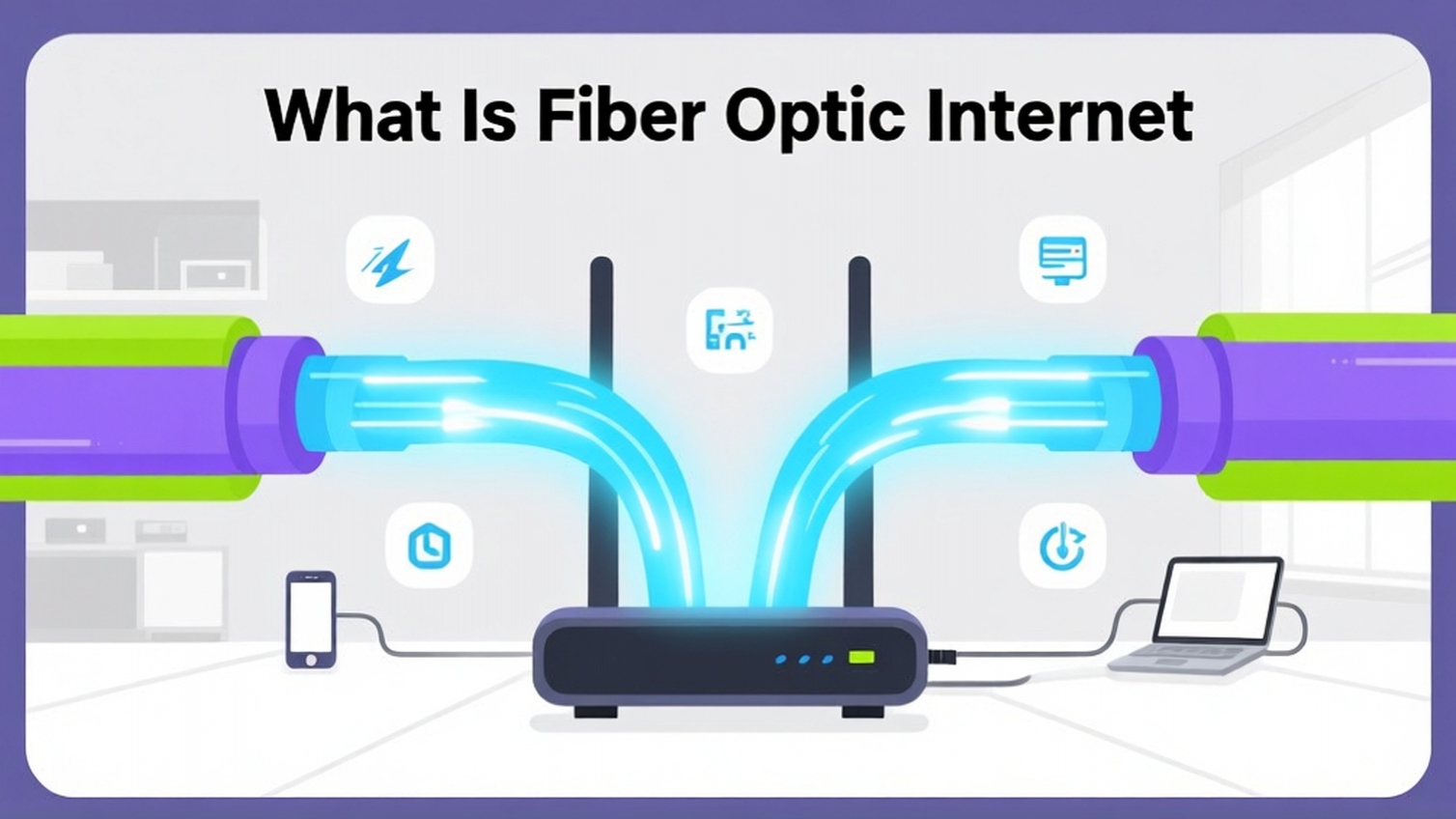
Fiber internet, or fiber broadband, uses very thin strands of glass or plastic to send data as pulses of light. Unlike cable and DSL, which use copper wires, fiber provides faster speeds, better reliability, and more consistent performance.
Think of it as a super-fast express lane for your internet traffic, powered by light instead of electricity.
Why People Love Fiber Internet
- Faster speeds
- Better upload performance
- Lower latency
- More reliability
- Ideal for heavy use and multi-device households
If your home has multiple devices, smart gadgets, or needs high bandwidth, fiber can handle it all without slowing down.
How Does Fiber Internet Work?
The science behind fiber optic internet sounds complex, but the concept is simple:
1. Light Transmits Data
Your online activity is turned into light beams using lasers or LEDs. This light carries everything from emails to 4K movies.
2. Light Travels Through Optical Fibers
These fibers are thinner than a human hair and are designed so light bounces cleanly inside them. This allows data to travel long distances without losing speed.
3. Your ONT Converts Light Back Into Usable Data
In your home, an Optical Network Terminal (ONT) converts those light pulses back into digital information your devices can use. This happens almost instantly, which is why fiber feels incredibly fast.
Types of Fiber Optic Internet Connections
Not all fiber is the same. The performance you get depends on how close the fiber cables are to your home or building. Here are the main types of fiber optic internet connections:
1. FTTH – Fiber to the Home
This is the best option. Fiber cables run directly into your home, providing maximum speed and stability.
2. FTTB – Fiber to the Building
Common in apartments or office buildings. Fiber reaches the building, and internal wiring (like Ethernet) distributes the connection to each unit.
3. FTTC – Fiber to the Curb
Fiber reaches a street cabinet near your home. The final stretch often uses copper lines, which can slightly reduce speed.
4. FTTP – Fiber to the Premises
Similar to FTTH but often used in business settings. FTTH/FTTP provides the fastest experience, while FTTC offers some benefits of fiber but not full performance.
Why Fiber Internet Is So Popular
Fiber has become the internet upgrade everyone talks about and for good reason. Here’s why it stands out.
1. Lightning-Fast Speeds
Fiber internet can reach speeds of 1 Gbps, 2 Gbps, and, in some areas, even 5-10 Gbps. That’s much faster than most cable or DSL connections.
You’ll notice the difference instantly in things like:
- Buffer-free streaming
- Super-quick downloads
- Smooth video conferencing
- Multi-device usage
When you switch to fiber broadband, everything online feels faster and more fluid.
2. Equal Upload and Download Speeds
Most people don’t think about upload speed until they try sending large files or hosting video calls. Fiber shines here; it often provides symmetrical speeds.
This is a game changer for:
- Content creators
- Remote workers
- Cloud users
- Gamers
- Students attending online classes
While cable may give you fast downloads, it rarely matches fast uploads. Fiber does both.
3. Ultra-Low Latency
Latency is the delay before data starts transferring, and fiber has some of the lowest latency available. This means fewer lags during activities.
- Online gaming
- Zoom meetings
- Real-time trading
- Remote applications
If you’ve ever yelled at your screen because your game lagged at the wrong moment, fiber can save you from that frustration.
4. Incredible Reliability
Fiber optic cables are resistant to:
- Weather-related interference
- Electrical noise
- Signal loss over distance
Whether it’s pouring rain or everyone in your neighborhood is online, your fiber internet connection stays steady.
5. Supports High-Bandwidth Homes
Modern households use many devices like TVs, laptops, gaming consoles, smart cameras, speakers, and thermostats. Fiber can support multiple high-demand devices without slowing down. No more arguments about who’s hogging the Wi-Fi.
Are There Any Downsides to Fiber Internet?
As great as fiber is, it’s not perfect for everyone.
1. Limited Availability
Fiber needs special infrastructure that isn’t everywhere, especially in rural areas.
2. Higher Installation Costs (Sometimes)
If fiber lines aren’t already installed in your area, setup may take extra time or need specialized work.
3. Not Always the Cheapest Option
While prices have dropped, fiber can still cost a bit more than basic cable or DSL packages.
4. Requires an ONT Device
Fiber needs an optical network terminal (ONT), which may need a specific spot in your home. Your provider usually installs it, but it's something to keep in mind.
Fiber vs Cable vs DSL: Who Wins?
Here’s a quick comparison:
1. Speed
Fiber: Clearly the fastest of the three options. If you want top download speeds for streaming, gaming, or transferring large files, fiber is the best choice.
Cable: It offers decent speed for everyday use. While it is not as fast as fiber, it reliably handles browsing, streaming, and other common internet tasks.
DSL: The slowest option. While it can manage basic tasks like web surfing or light streaming, it won’t keep up with high bandwidth activities.
2. Upload Speed
Fiber: Offers very high upload speeds, often matching its download performance. This makes fiber ideal for video calls, cloud backups, and content creation.
Cable: Upload speeds are much lower than download speeds, making it less efficient for heavy uploading tasks.
DSL: Upload speed is limited, just enough for light tasks like sending emails or transferring small files.
3. Reliability
Fiber: Extremely reliable. Because data travels as light through fiber, connections stay stable and resist interference or signal loss.
Cable: Moderately reliable. Cable networks can slow down during peak hours since bandwidth is shared among multiple users.
DSL: Less reliable over long distances, and performance can drop if you’re far from the provider’s central office.
4. Latency
Fiber: Has the lowest latency of the three, providing extremely responsive performance great for gaming or real-time online activities.
Cable: Latency is decent but not as low as fiber; small delays may happen, especially during heavy network usage.
DSL: Has the highest latency, which can lead to noticeable delays in activities like competitive gaming or live collaboration.
5. Best For
Fiber: Best for high-demand users like gamers, video streamers, smart home enthusiasts, and those who work from home and need fast, stable connections.
Cable: Suitable for general use by families that stream, browse, and do normal internet tasks without needing ultra-high speeds.
DSL: Best for basic internet tasks like checking email, light browsing, and possibly some low-quality streaming, especially when fiber or cable isn’t available.
Fiber is clearly the best option if you want fast, reliable internet that can keep up with a busy home.
Is Fiber Broadband Worth It?
If speed, stability, and future-proof technology matter to you, then yes, fiber is worth it. It offers one of the best internet experiences available today, especially if you rely heavily on streaming, remote work, gaming, or smart home devices.
Conclusion
Fiber optic internet has quickly become the best choice for home connectivity, and for good reason. With its incredible speed, reliable performance, and ability to support multiple devices at once, fiber broadband is perfect for modern digital lifestyles. Whether you’re a remote worker, a gamer, or tired of constant buffering, a fiber internet connection provides the smooth, stress-free online experience you want.
If fiber is available in your area, it’s one of the smartest upgrades you can make for your home or business.
FAQs on Fiber Internet
1. What is fiber internet and how is it different?
Fiber internet uses tiny glass strands to send data as light, allowing information to travel incredibly fast. This makes it much more reliable and efficient than cable or DSL, which use slower electrical signals.
2. Is fiber internet faster than cable?
Yes, fiber provides significantly higher download speeds and much faster uploads. It also maintains performance during peak hours, so your connection stays smooth even when everyone’s online.
3. Does fiber internet require special equipment?
You’ll need an ONT (Optical Network Terminal), which your provider installs during setup. This device converts the light signal into usable internet that your router can share across your home.
4. Is fiber good for gaming and streaming?
Definitely, fiber delivers low latency, stable speeds, and almost zero lag. Whether you’re streaming in 4K or playing fast-paced online games, fiber keeps everything running smoothly.