If you’re shopping for home internet, you’ve probably found it confusing to compare DSL Internet, Cable Internet, and Fiber Internet. Every provider claims to offer the fastest speeds, the most reliable network, or unlimited data, but what does that really mean for you as a typical user?
Maybe you work from home and your Zoom calls keep freezing. Perhaps your kids complain about lag during online classes or gaming. Or maybe you’re just tired of slow downloads and want to know if switching to a different type of connection can help.
This is where it matters. Choosing the right connection type is important. Understanding the differences between DSL, Cable, and Fiber is the first step toward getting the internet experience you want.
Let’s break down each option in a straightforward way without tech jargon or marketing hype.
Why Choosing the Right Internet Type Matters More Than You Think
Think of your internet like the plumbing in your home. If the pipes are slow, small, or outdated, the water (or data) flows slowly. That’s how internet technologies vary.
Your choice affects:
- How many devices can connect without slowing down
- How fast your apps load
- Whether streaming in 4K works smoothly
- How good your video calls look
- Whether your Wi-Fi drops during busy hours
By knowing about DSL Internet, Cable Internet, and Fiber Internet, you can make a smarter choice not just a cheaper one.
Let’s break them down.
DSL Internet: Basic, Budget-Friendly, and Widely Available
DSL Internet, or Digital Subscriber Line, is one of the oldest broadband options. It still serves millions of homes today. It uses regular copper telephone lines to deliver internet. Since these lines are everywhere, DSL has great availability.
Why People Choose DSL Internet
- It’s affordable
- Works for basic online activities
- Available in rural and suburban locations
- Easy to install
If your needs include checking email, browsing, light social media, and occasional video streaming, DSL gets the job done.
Where DSL Struggles
- Limited speed potential
- Upload speeds are slow
- Performance drops the farther you are from the provider’s equipment
- Not ideal for big households or heavy streaming
DSL is great for simplicity and low cost, but not ideal if you rely heavily on the internet.
Cable Internet: Fast, Reliable, and Popular
Next is Cable Internet, which is one of the most commonly used connection types in the U.S. Cable uses the same coaxial cables that deliver cable TV. These cables provide much more bandwidth than DSL, resulting in faster speeds overall.
Why So Many Homes Use Cable Internet
- Fast download speeds
- Affordable pricing
- Widely available
- Good for streaming, gaming, remote work, and multi-device households
- More consistent than DSL
Cable offers a solid balance between performance and price, making it a go-to option for families and heavy internet users.
Cable Internet Limitations to Know
- Upload speeds are usually much lower than downloads
- Peak-hour slowdowns may happen in busy neighborhoods
- Not as future-proof as Fiber Internet
If you want speed without the highest price tag, cable is a great middle ground.
Fiber Internet: The Fastest, Most Advanced Option
Now let’s discuss the best option: Fiber Internet. Fiber uses ultra-thin strands of glass that send data as pulses of light. In simple terms, it is very fast, highly reliable, and built for the future.
Why Fiber Internet Is the Best You Can Get
- Fastest download and upload speeds
- Symmetrical speeds (great for Zoom, uploading, content creation)
- Ultra-low latency
- Handles many devices with zero slowdown
- More stable than cable or DSL
If you work from home, game competitively, stream in 4K, or share a home with heavy internet users, Fiber gives you the smoothest experience possible.
Where Fiber Falls Short
- Still not available in many areas
- Installation may require new wiring
- Usually more expensive than DSL or basic cable plans
But if Fiber Internet is available at your address, it’s almost always worth considering.
Cable vs Fiber vs DSL: How They Compare in Real Life
Knowing the technology is helpful, but what you really want to know is how these options work in everyday use.
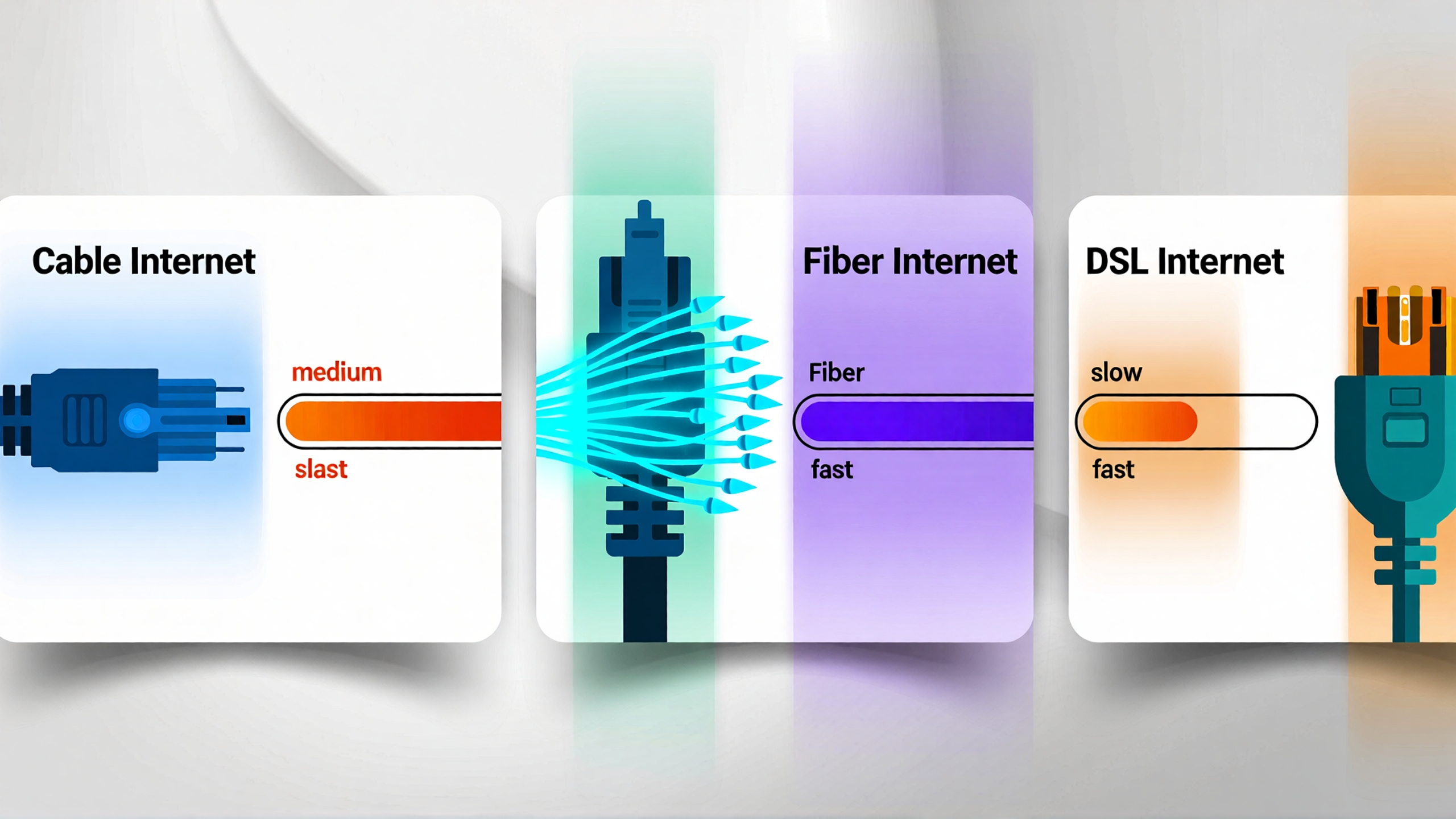
Speed Differences
- Fiber Internet is the fastest and most consistent.
- Cable Internet is fast but has slower uploads.
- DSL Internet is the slowest and meant for light use.
Reliability
- Fiber Internet is the most stable because it uses light instead of electricity.
- Cable Internet is solid but can slow down during peak times.
- DSL Internet is reliable but outdated, so performance is limited.
Best for Streaming & Gaming
- Fiber > Cable >>> DSL
Fiber has the lowest latency, which is key for gaming and smooth video calls.
Cost Differences
- DSL Internet: cheapest
- Cable Internet: mid-range but good value
- Fiber Internet: often highest price but best performance
Availability
- DSL Internet: nearly everywhere
- Cable Internet: widely available
- Fiber Internet: growing fast but still limited in rural areas
Which One Is Right for You? A Simple Breakdown
Choosing between Cable vs Fiber vs DSL depends on your needs, not just the price.
Choose DSL Internet if:
- You’re on a tight budget
- You live in a rural area with limited options
- You use the internet lightly
Choose Cable Internet if:
- You want fast, affordable speeds
- You have multiple users or devices
- You stream, game, or work remotely
- Fiber isn’t available in your area
Choose Fiber Internet if:
- You want the fastest speeds possible
- You work from home or upload a lot
- You have many internet-hungry devices
- You want long-term, future-proof service
If Fiber Internet is available, it’s usually the best choice. If not, Cable is a strong alternative. DSL is a good option if you prefer simplicity and lower costs.
Conclusion
Understanding the differences between DSL Internet, Cable Internet, and Fiber Internet is key to choosing the right connection for your lifestyle.
Here’s the simple truth:
- DSL is the most budget-friendly and available almost everywhere.
- Cable Internet delivers the best balance of speed, cost, and reliability.
- Fiber Internet is unbeatable for speed, performance, and future-proofing.
When deciding between Cable, Fiber, and DSL, think about what you do online, how many people need access, and what’s available in your area. The right choice can completely change your internet experience.
FAQs About Cable vs Fiber vs DSL
1. Which is the best: DSL, Cable, or Fiber?
Fiber is the best overall. Cable is a strong second, and DSL is best for basic needs.
2. Is Fiber Internet worth the price?
Yes, fiber offers unmatched speed, low lag, and excellent upload performance.
3. Is Cable Internet good for gaming and streaming?
Absolutely. Cable delivers plenty of speed for 4K streaming, gaming, and multiple devices.
4. Is DSL going away?
In many regions, yes. Providers are slowly replacing DSL with cable and fiber networks.
5. Which type is best for rural areas?
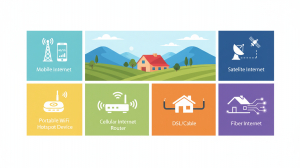
DSL is most available, but fixed wireless or satellite might be better where fiber and cable aren’t available.