Download

1 / 12
0 likes | 3 Views
Explore 40 years of sesame farming and trade expertise in this comprehensive PowerPoint presentation. Learn about cultivation practices, global market trends, health benefits, challenges, and reliable supplier connections to succeed in the sesame business.

E N D
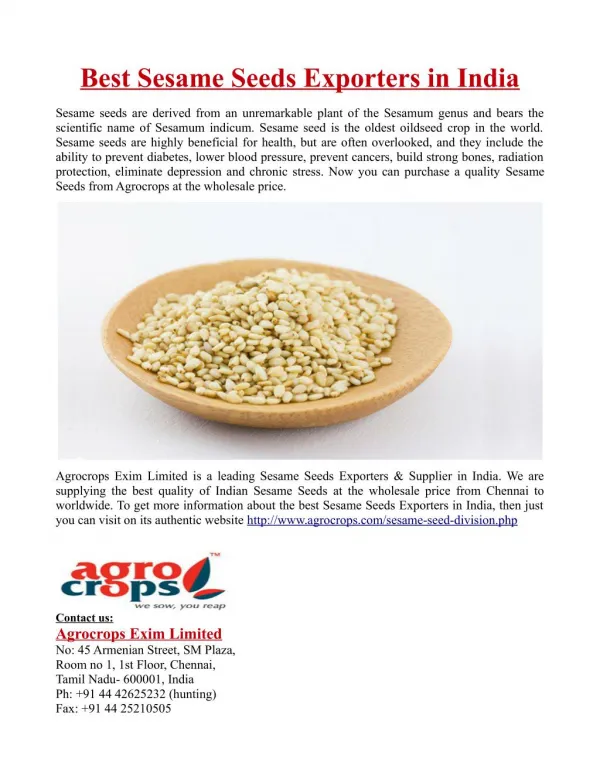
Sesame Seeds: Insights from a 40-Year Farming & Trade Expert • Cultivation, Global Demand, and Business Opportunities
Why Sesame Matters • • One of the oldest cultivated oilseeds, valued for high oil content and resilience • • Over 40 years of expert insights in sesame farming and trade • • Used in food, health, and cosmetic industries
A Crop with Ancient Roots • • Origins in Indus Valley and Mesopotamia over 4,000 years ago • • Ancient uses: medicine, cooking, traditional remedies • • Modern cultivation: 60+ countries worldwide
Key Advantages for Farmers • • Drought-resistant and ideal for low-rainfall regions • • High oil yield: 45–55% • • Multiple uses: oil, seeds, tahini, bakery & confectionery • • Export potential: global demand ensures good returns
From Soil to Harvest • • Soil & Climate: Sandy loam, 25–35°C, well-drained • • Seed Selection: High-yield, disease-resistant varieties • • Planting & Harvesting: Timing crucial; avoid pod shattering • • Post-Harvest Handling: Drying & cleaning maintain quality
Common Hurdles • • Pod shattering losses (up to 25%) • • Price volatility from global demand • • Quality issues: aflatoxin contamination • • Smallholder dominance affecting bargaining power
Why Consumers Love Sesame • • Rich in unsaturated fats & antioxidants (sesamin, sesamolin) • • Excellent source of calcium, magnesium, and zinc • • Supports heart health & functional foods
Sesame in International Trade • • Global production: ~6.5 million metric tons (2023) • • Top producers: Sudan, Myanmar, India, Tanzania, Nigeria • • Major importers: China, Japan, EU, USA • • Price influenced by weather & demand fluctuations
Building Trust in Trade • • Quality, timely delivery, and fair pricing are essential • • Strong networks reduce risk in global trade • • Resource: Sesame Suppliers (http://sesamesuppliers.com/) for trusted connections
Opportunities Ahead • • Rising demand for plant-based oils and health foods • • Growth of bakery, snack, and cosmetic industries • • Organic sesame becoming a premium product • • Key success: modern farming + reliable partnerships
Lessons from 40 Years of Experience • • Sesame is more than a seed: a global livelihood • • Success depends on quality, sustainability, and trusted trade partners • • Farmers and businesses connecting through experienced suppliers thrive in international markets
Connect with Trusted Suppliers • • Explore reliable partners for your sesame trade needs: http://sesamesuppliers.com/ • • Enhance quality, build networks, and grow your business globally