Download

1 / 14
140 likes | 274 Views
Decoding Vibrations from Nearby Keyboards Using Mobile Phone Accelometers Philip Marquardt (MIT Lincoln Laboratory) Arunabh Verma Henry Carter Patrick Traynor (Georgia Institute of Technology). INTRODUCTION. In 90s - No Web browser No Email Client Low Processing Power No Sensors.

E N D
Decoding Vibrations from Nearby Keyboards Using Mobile Phone Accelometers Philip Marquardt(MIT Lincoln Laboratory) Arunabh VermaHenry CarterPatrick Traynor(Georgia Institute of Technology)
INTRODUCTION • In 90s - • No Web browser • No Email Client • Low Processing Power • No Sensors • In 2012 - • Competent with Desktops • Browsers with Flash support • Sophisticated Sensors
ACCELEROMETERS • Accelerometers can be used to leak unintended significant information from user’s environment. • Keypresses made on a nearby keyboard can be recorded and reconstructed on the basis of vibrations. • Neural Network used to develop profiles for keypress events. • Dictionaries used to to recover words from the translated content.
MOTIVATION • Use of emanations of electrical and mechanical devices to expose information. • Electro-magnetic emanations enabled Data recovery from CRT and LCDs. • Similar attacks on emanations from Smart Cards, CMOS Chips, Serial port cables and keyboards. • Acoustic emanations made by devices easily captured by less capable adversaries.
EXPERIMENTAL SETUP • Can keypresses be detected by present Sensors? • Can previously developed methodology be applied to identify keystrokes? • iPhone 4 • Apple A1255 Wireless Bluetooth keyboard • Phone and Accelerometer • Signal Processing (Matlab’s FFT) • RapidMiner/Machine Learning
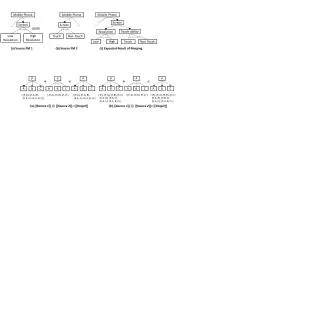
MODELLING • Keypress Event Modeling • Low Sampling rate of accelerometer • Difficult to characterize individual keys • Characterize pairs of key presses by defining a relation • Relation b/w two successive keypresses Pi, Pj using two features • Horizontal Orientation : loc(Pi) • Distance between Consecutive KeyPresses : dist (Pi, Pj)
Contd.. • We define consecutive keypress events as rel(Pi, Pj) = loc(Pi)||loc(Pj)||dist(Pi, Pj), where || represents feature concatenation. • Eg: “canoe” • ca : LLN • An : LRF • no : RRF • oe : RLF “canoe” = LLN.LRF.RRF.RLF
LEARNING PHASE • Data Collection • Keys A to Z pressed 150 times randomly • 3900 distinct key press events • Feature Extraction • Define a feature vector for every key stroke containing time-domain and frequency domain features • FV (Pi)= <mean, kurtosis, variance, min, max, energy, rms, mfccs, fft> • Word Labeling • Train the model using a dictionary • Each word in the training dictionary is broken down into its constituent characters and character-pairs.
ATTACK PHASE • Data Collection • Feature extraction • Key-Press Classification • Word matching • The word matcher takes each predicted word profile of length n-1 and assigns a score against each word in the dictionary with length n.
EXPERIMENTAL RESULTS 2 Test Sentence – First ten sentences from “Harvard Sentences” Dictionary– Same ten sentences.
CHALLENGES and LIMITATIONS • Recognition versus Distance – Small increase in distance drastically decreases the effectiveness of attack. • Orientation of Monitoring Device • Possible ambient vibrations (including typing speed) • Characteristics of the desk surface
CONCLUSION • The first level of security within smart phone is at the level of Operating System. • Powerful sensors present in Mobile Phones can be utilized for recovering data from nearby keyboard. • Thus, access to sensors must be carefully monitored and regulated to overcome the security hazards. • Concrete protocols must be enforced for authenticated access of sensors by applications.
THANK YOU !! Ravikanth Safina Srinivas