Download
1 / 9
90 likes | 205 Views
This guide outlines the Cycle of Inquiry, a systematic approach to conducting research. Learn to identify key questions, draft a thesis statement, and develop an efficient information-gathering strategy. Discover how to sift through data, analyze findings, and revise your thesis based on new insights. The process encourages synthesizing information to create persuasive arguments. It emphasizes the importance of evaluation and checking for gaps in understanding. Embrace the iterative nature of research, as complex questions often require revisiting earlier stages before achieving clarity.

E N D
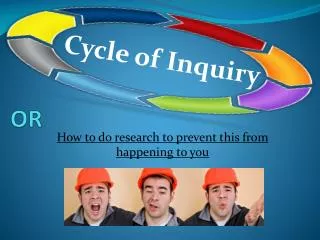
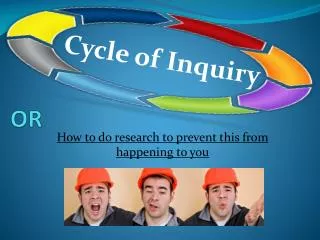
OR Cycle of Inquiry How to do research to prevent this from happening to you
Question Identify the questions you need to explore Develop a draft thesis statement
Plan Develop a strategy to find information efficiently Before you search identify key words in your thesis statement and where you may find information on them
Gather collect information that helps answer your thesis statement
Sort, Sift, and Analyze Revisit your thesis statement and revise if needed Rearrange the pieces Based upon what you gathered
Synthesize Make sense of it all, get the picture! See if you information can be used to persuade others to support your thesis statement and begin to write
Evaluate – determine what’s missing, and what’s needed Do a final check
Share present your insights persuasively
The most challenging questions require several passages around in the cycle before you have enough information to understand the topic and present your thoughts effectively. Sometimes it’s okay to go around in circles! Adapted 6/2013 by D. Parker revised by O. Foraker 11/2013rom materials by Jamie McKenzie