Download
1 / 19
190 likes | 314 Views
Anxiety disorders encompass various conditions such as Panic Disorder, PTSD, and OCD, characterized by intense feelings of dread and a range of physical symptoms that can peak rapidly. Individuals may experience repeated panic attacks, excessive worry, and specific phobias. PTSD symptoms may include reexperiencing trauma, avoidance, and heightened arousal, while GAD involves persistent worry. Biological factors involve neurotransmitters like norepinephrine, serotonin, and GABA. Effective treatments include therapy, medications, and lifestyle adjustments tailored to individual needs.

E N D
Panic Attack • Brief episode where pt. feel intense dread accompanied by a variety of physical and other symptoms that begin suddenly and peak rapidly (usually 10 minutes) • Physical/mental sensations • Chest pain, chills or hot flashes, choking sensation, derealization/depersonalization, dizziness, fear of losing control, tachycardia, numbness, sweating, shortness of breath, trembling.
Panic Disorder • Repeated Panic Attacks • Worry/dread at having additional attacks • With/without Agoraphobia
Posttraumatic StressDisorder • Symptoms following exposure to extreme trauma present for at least one month. • Experiencing or witnessing an event that involves actual or threatened death or serious injury to self or another • Elicits a reaction of intense fear, helplessness, or horror • After trauma there is persistent reexperiencing of the trauma, persistent avoidance of stimuli associated with trauma, and persistent symptoms of increased arousal
Acute Distress Disorder • Similar to PTSD, except Sx must have onset within 4 weeks of the trauma and must last for at least 2 days but no longer than 4 weeks • 3 or more dissociative Sxs (e.g.. sense of numbing or emotional detachment, derealization, dissociative amnesia) • Must exhibit persistent reexperiencing of the trauma. • Marked avoidance of stimuli that cause recollection the trauma • Sxs of marked anxiety or increased arousal.
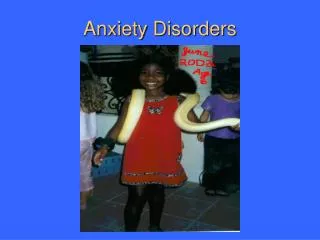
Phobia • Specific Phobia-patients fear specific objects or situation, such as animals, storms, heights, blood, airplanes, being closed in or any situation that may lead to vomiting, choking or developing an illness. • Social Phobia-These patient imagine themselves embarrassed when they speak, write, or eat in public, use a public urinal; during exposure-immediate panic attacks.
Generalized Anxiety Disorder • Excessive anxiety and worry about multiple events or activities. • The anxiety and worry are relatively constant for at least 6 months, and the person finds them difficult to control. • Must entail 3 of following: restlessness, being easily fatigued, difficulty concentrating, irritability, muscle tension, and sleep disturbance • Disproportionate to feared events or their potential impact • Worrier or GAD? Measures-State Trait Inventory; How else?
Substance-InducedAnxiety Disorder • The development of anxiety, OC Sxs, or panic attacks are present within one month of Substance Intoxication or Withdrawal or are due to medication use. • Associated with caffeine, cannabis, cocaine, hallucinogen, inhalant, and PCP intoxication and withdrawal from alcohol, cocaine, or a sedative, hypnotic or anxiolytic • Medications and toxins (e.g. gasoline, paint, insecticides, and CO can produce anxiety symptoms.)
Obsessive-Compulsive Disorder • Characterized by recurrent obsessions or compulsions that are severe enough to cause significant distress, to be time-consuming (take more than one hour per day), or to markedly interfere with the person’s usual routine, occupational or academic functioning, social activities and relationships. • Person must be aware, at some time during the course of the disorder, that his/her obsessions and compulsions are excessive or unreasonable
Biology & Anxiety • Peripheral Nervous System • Somatic • Sensory Systems • Skeletal Motor System • Autonomic • Sympathetic-arousal & energy expenditure • Parasympathetic-conservation of energy
ANS & Anxiety Disorders • Although primarily involuntary, it has been found to be brought under voluntary control • Pts. With Anxiety D/O’s demonstrate delayed response to repeated stimuli and excessive response to moderate stimuli • Predisposition or Learning?????
Panic (M/F%) 2/5 Agoroph. W/O 3.5/7 Social Phobia 11/15 Simple Phobia 7/16 Gen. ADO 4/7 OCD 2/3 Any Phobia 10/18 Any ADO 19/31 1.3 vs. 3.2 1.7 vs. 3.8 6.6 vs. 9.1 4.4 vs. 13.2 2.0 vs. 4.3 1.4 vs. 1.9 6.2 vs. 12.8 11.8 vs. 22.6 Anxiety D/O EpidemiologyLifetime % 12-Month %
Neurotransmitters • Norepinephrine, Serotonin & GABA • Act in brainstem (noradrenergic neurons); limbic system(anticipatory anxiety) and prefrontal cortex • PFC associated with the possible generation of phobic avoidance
Norepinerhrine • Pts. have poorly regulated noradrenergic systems leading to occasional energy bursts • Stimulation leads to fear response • Beta-adrenergic agonists (Isuprel) or Alpha2-adrenergic antagonist (Yohimbine) lead to severe panic attacks • Alpha2-adrenergic agonist (Clonidine/Catapres) & B-ATN (Propanolol/Inderal) reduce anxiety
Serotonin • Many SE type receptors-more selective • Clomipramine (Anafranil)-OCD • Buspirone (Buspar) 5HT agonist with projections from brainstem, cortex, limbic system and hypothalamus
GABA (Aminobutyric Acid) • Most common inhibitory NT in CNS • Benzodiazepines increase the activity of GABA at the receptor • Low potency most treatment for GAD • High potency GABA’s (e.g. Xanex) have been effective in treatment of PDO
Anxiolytic MedicationsWhat to Rx? • SSRIs: Paroxetine (Paxil) • other alternatives? • Benzodiazepines • Alprazolam (Xanex) Lorazepam (Ativan) & Clonzaepam (Klonopin) • Advantages and disadvantages? • Tricyclics: Clomipramine & Imipramine (Tofranil) • Alternatives, advantages & disadvantages
Psychotherapy and ADOs • Controversies? • In vivo exposure with response prevention (flooding) –Agoraphobia • SDT or Participant modeling-Specific Phobias (observation/graded participation) • CBT, PMR, Social skills training & Assertiveness Training • Medication vs. Psychotherapy?