Download

1 / 6
0 likes | 6 Views
Septic Land Capability Assessments focus on evaluating land for safe septic system installations. These assessments consider soil absorption rates, water drainage, and land stability to ensure the system wonu2019t harm the environment or public health. A proper LCA is crucial to avoid costly issues and meet regulatory standards. Our experts provide septic-focused LCAs that ensure effective waste management solutions, helping you plan confidently for septic installations.

E N D
The Importance of Land Capability Assessments for Commercial Properties In today’s evolving property and construction landscape, understanding the true potential of land is crucial for making informed decisions. Whether you're a developer, investor, or business owner, conducting a About land capability assessments is an essential step before proceeding with any construction, particularly when installing septic systems or assessing commercial viability. In this article, we’ll explore: ● What a Land Capability Assessment involves ● Why commercial land capability assessments are vital ● The legal and environmental implications ● The LCA process and its benefits
What is a Land Capability Assessment? A Land Capability Assessment (LCA) is a detailed evaluation of a specific parcel of land to determine its suitability for a particular use. It assesses the physical, chemical, and environmental characteristics of the land to establish whether it can support certain activities without causing adverse impacts. For commercial properties, LCAs are particularly important when planning developments that involve wastewater management systems, stormwater drainage, or large-scale agricultural or industrial operations. The assessment typically includes: ● Soil analysis: Testing permeability, drainage capacity, and nutrient content ● Topography and slope evaluation: To determine runoff and erosion risks ● Groundwater and hydrology studies: Ensuring the water table won't be compromised ● Vegetation and land cover analysis: Understanding how existing vegetation affects the land's capacity ● Climate factors: Considering rainfall and evaporation rates Why Are Commercial Land Capability Assessments Important? When it comes to commercial property development, LCAs play a pivotal role in both compliance and sustainability. Here’s why: 1. Legal Compliance and Regulatory Requirements Commercial land developments are bound by stringent environmental and planning regulations. In Australia, particularly in states like Victoria, local councils and environmental protection authorities require LCAs for: ● Septic system installations ● Subdivisions or land rezoning applications ● Construction of commercial infrastructure near sensitive areas (e.g., wetlands, waterways)
Without a proper LCA, obtaining building or wastewater permits can be challenging or even impossible. 2. Environmental Protection LCAs help mitigate the environmental impact of commercial projects by identifying potential risks like: ● Soil degradation and erosion ● Water contamination from wastewater ● Loss of native vegetation or habitat By identifying these risks early, developers can implement effective mitigation strategies, such as installing buffer zones or using eco-friendly septic solutions. 3. Financial and Investment Benefits For commercial developers, Commercial land capability assessments minimize costly errors. Investing in an LCA before purchasing or developing land can prevent: ● Expensive remediation efforts due to unexpected soil instability or poor drainage ● Legal fines from non-compliance with environmenSeptic Land Capability Assessmenttal regulations ● Loss of investment in land that cannot support intended activities 4. Sustainable Infrastructure Planning Whether planning a commercial building, industrial complex, or a large-scale agricultural operation, understanding the land's carrying capacity is vital. LCAs provide insights into: ● The best areas for infrastructure placement ● Required drainage or wastewater management systems ● Sustainable land use practices The Process of Commercial Land Capability Assessments
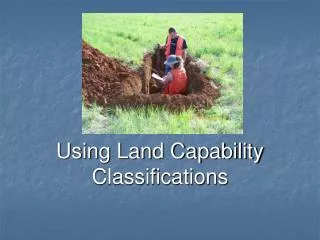
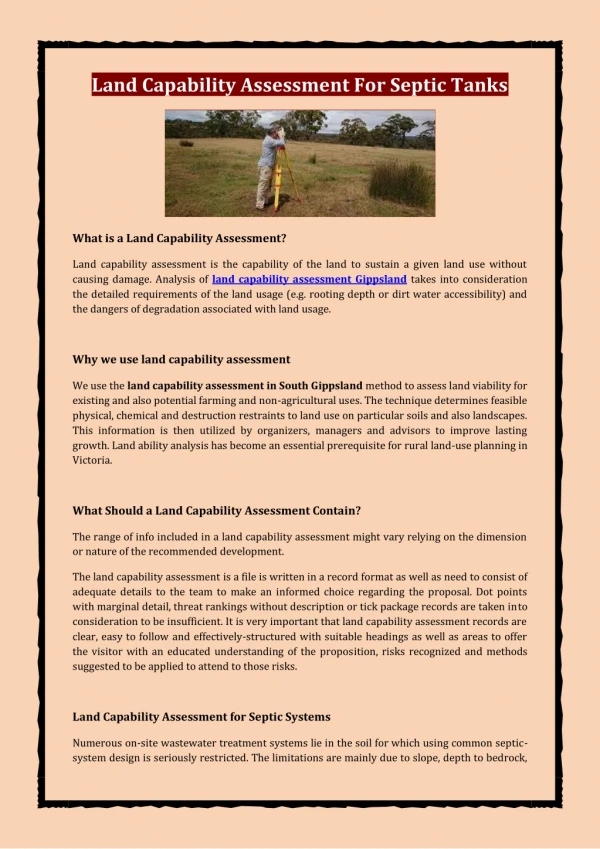
At Septic Land Capability Assessment, we follow a thorough and science-backed process to evaluate commercial land. Here’s what you can expect: Step 1: Site Inspection and Data Collection Our team conducts a detailed site visit to gather essential information, including: ● Soil sampling and testing to measure permeability, texture, and structure ● Topographic mapping to identify slopes and drainage patterns ● Hydrological data collection to assess water movement and potential impacts Step 2: Soil and Water Testing In commercial LCAs, understanding the soil's capacity to absorb and treat wastewater is critical. We perform: ● Percolation tests to evaluate soil infiltration rates ● Water table assessments to prevent contamination risks ● Nutrient retention and filtration tests Step 3: Analysis and Reporting Our experts compile the data into a comprehensive report that includes: ● Land suitability ratings for the intended commercial activity ● Risk assessments and environmental impact predictions ● Mitigation strategies to optimize land use without compromising environmental integrity Step 4: Council Submission and Approval We ensure the final LCA report meets local regulatory standards, helping you secure the necessary permits efficiently. Key Factors Evaluated in Commercial Land Capability Assessments When conducting an LCA for commercial properties, several factors play a critical role in determining the land's suitability:
1. Soil Quality and Structure Soil composition directly affects its drainage capacity and stability. For septic systems, for example, soil that drains too quickly may lead to groundwater contamination, while poorly draining soil can cause surface pooling. 2. Water Table Levels High water tables can interfere with septic systems, while low water tables may limit water access for agricultural operations. 3. Vegetation and Land Cover Existing vegetation impacts soil stability and water retention. A heavily forested area may require significant clearing, while sparse vegetation could indicate poor soil fertility. 4. Rainfall and Climate Conditions In regions with heavy rainfall, erosion risks are higher, making proper drainage systems essential. 5. Land Slope and Topography Steep slopes can lead to runoff and erosion issues, making them less suitable for large commercial operations. Flat, stable terrain is generally preferred. Benefits of Partnering with Septic Land Capability Assessment At Septic Land Capability Assessment, we specialize in delivering thorough and reliable LCAs for commercial properties across Australia. Our team of experts offers: ● Accurate and compliant reporting: Our LCAs meet local council and regulatory requirements. ● Detailed environmental assessments: We consider every factor affecting land capability. ● Expert recommendations: Our reports include practical solutions to enhance land usability. ● Efficient council submission support: We streamline the approval process for your commercial project.
Industries That Benefit from Land Capability Assessments LCAs are essential for a variety of commercial sectors, including: Property Developers: Ensure land is suitable for subdivisions and large-scale commercial builds. Agriculture: Evaluate land for crop production, grazing, or irrigation systems. Industrial Projects: Assess soil and water conditions for large infrastructure projects. Septic System Installers: Ensure compliance with wastewater management regulations. Conclusion Conducting a Land Capability Assessment is a vital step for any commercial property development. It ensures you comply with regulations, safeguard the environment, and make informed financial decisions. At Septic Land Capability Assessment , we take the guesswork out of land evaluation by delivering precise, science-backed assessments. Whether you're planning a new commercial project or evaluating existing land, our expert team is here to help.