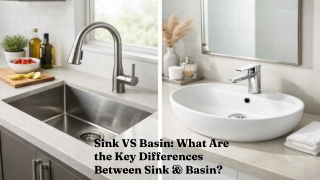
Key Differences Between Sink & Basin?
0 likes | 0 Views
Confused between a sink and a basin? This detailed guide explains the key differences between sink and basin, including purpose, design, materials, installation, and ideal usage. Learn where each fixture fits best, how they function, and which one is right for your kitchen or bathroom. Make informed choices for better functionality, hygiene, and modern home design.nlink: https://www.senatorbathware.com/sanitaryware/basins


Key Differences Between Sink & Basin?
E N D
Presentation Transcript
Sink VS Basin: What Are the Key Differences Between Sink & Basin?
When designing or renovating a home, choosing the right bathroom or kitchen fixtures is crucial. One of the most common points of confusion for homeowners is the difference between a sink and a basin. Although these terms are often used interchangeably, they are not exactly the same. Understanding their differences helps you make informed decisions based on usage, space, and functionality. In this guide, we break down the key differences between a sink and a basin, covering purpose, design, materials, installation, and ideal applications.
What Is a Sink?A sink is a plumbing fixture designed primarily for heavy-duty tasks. It is commonly used for washing utensils, cleaning food items, and handling water-intensive activities. Sinks are most frequently found in kitchens, utility rooms, and laundry areas. Sinks are generally deeper and more robust. They are built to withstand frequent use, higher water pressure, and exposure to heat, grease, and chemicals. Because of this, functionality takes priority over aesthetics in most sink designs.
What Is a Basin?A basin is a shallow fixture mainly intended for personal hygiene. It is typically installed in bathrooms and washrooms for handwashing, face washing, and basic grooming tasks. Basins focus more on comfort and appearance. They are designed to complement bathroom interiors and are available in a wide range of styles, shapes, and finishes. Unlike sinks, basins are not meant for heavy cleaning or large volumes of water.
Sink Vs Basin: Primary PurposeThe most important difference between a sink and a basin lies in how they are used. • Sinks are designed for functional and utility-based tasks. • Basins are designed for hygiene and personal care. Difference in Design and Depth Design plays a major role in distinguishing a sink from a basin. Sinks are usually deeper, allowing them to hold larger utensils and prevent water splashing. Their shape supports efficient cleaning and water drainage. Basins, on the other hand, are shallower. This makes them comfortable for everyday use and easy access. Their designs are often sleek and minimal, enhancing the overall bathroom aesthetic.e attractive on the market.
Materials Used in Sink and Basin Common Sink Materials • Stainless steel • Granite composite • Fireclay • Quartz These materials offer durability, heat resistance, and long-term performance. Common Basin Materials • Ceramic • Porcelain • Glass • Stone Basin materials focus more on visual appeal while still maintaining hygiene standards.
Installation Styles Compared Sinks and basins also differ in installation methods. Sink installation types include: • Top-mount sinks • Undermount sinks • Farmhouse sinks Basin installation types include: • Countertop basins • Wall-hung basins • Pedestal basins • Semi-recessed basins Maintenance and Cleaning Sinks require frequent and thorough cleaning due to food waste, grease, and stains. Therefore, durability and stain resistance are essential. Basins are easier to maintain since they mainly handle soap and clean water. Regular wiping and basic cleaning keep them hygienic and spotless.
THANK YOU Follow Us on