Download
1 / 12
120 likes | 238 Views
This presentation by Frans Bastiaens provides an update on the HIT project, highlighting challenges and future goals in labor-oriented education for asylum seekers. It discusses the educational methodologies applied, such as transferable and structural learning methods, and outlines communication structures among key partners. It addresses the complexities of repatriation, the necessary embedding of independent monitoring, and the importance of engaging women and diverse target groups in education. The findings from the project demonstrate a commitment to learning through trial and improvement, ensuring that the pursuit of educational goals continues.

E N D
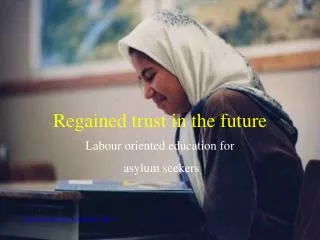
Regained trust in the future • Labour oriented education for • asylum seekers Frans Bastiaens February 2003
Goal of this presentation Update on the status of HIT Including bottlenecks and a view to the future
Goals of the Equalproject Educational methodology (Transferable, Structural, experimental group of 500 persons) Communication structure (File-building) Repatriation model (Groupwise and individual) Independent monitoring (Input, output, description, improvement suggestions)
Educational methodology • Development by doing • Assistance by professionals • Extra hours for coordination and method development • Product defined in contract
Communication structurePartners & bottlenecks • COA–Education–IOM-Cities- Agreements- Clear communication lines- Procedures- Files
Repatriation challenges • Repatriation: • is a subject, • needs structure, • needs description, • Needs someone responsible.
Independent Monitoring Needs to be embedded in existing (communication) structures
Future challenges • Declining numbers • Getting more women in the classrooms • Building bridges between different target groups (asylum seekers – refugees) • Getting the project carried in management levels of (participating) organisations • Supporting dissemination and mainstreaming through a film about the project
Conclusions • HIT is a project carried out by trial & failure • HIT is still pioneering • Parties involved are enthusiastic • There is enough basis to carry on and prove the need of the pursued goals