The Process Designing Animated Character
An animated character can offer a new feel to a video as well as also make it stand out from other such videos. Such characters are intentionally made to give a larger than life image, to make them right away grab the attention of viewers. They are made to seem, behave and act in a certain manner. If you want animated character for your business, consider hiring us! https://sbanimation.com/.

The Process Designing Animated Character
E N D
Presentation Transcript
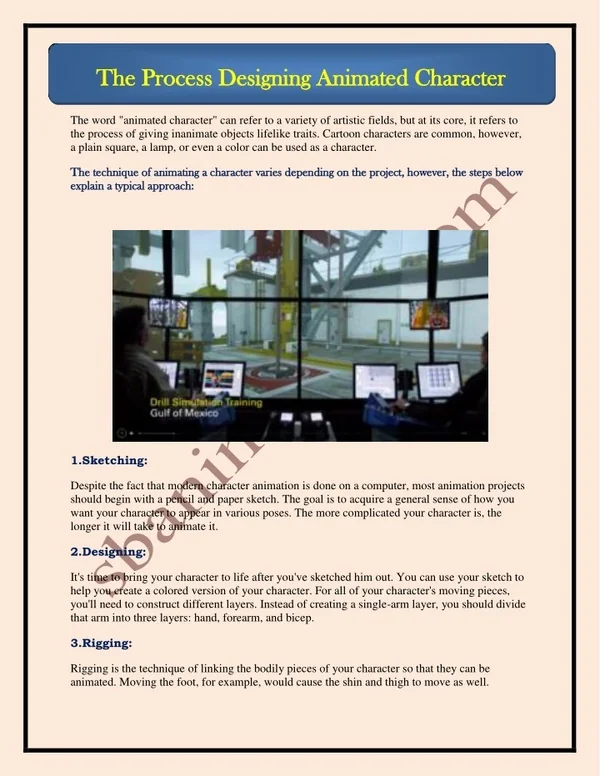
The Process Designing Animated Character The Process Designing Animated Character The word "animated character" can refer to a variety of artistic fields, but at its core, it refers to the process of giving inanimate objects lifelike traits. Cartoon characters are common, however, a plain square, a lamp, or even a color can be used as a character. The tec The technique of animating a character varies depending on the project, however, the steps below hnique of animating a character varies depending on the project, however, the steps below explain a typical approach: explain a typical approach: 1.Sketching: Despite the fact that modern character animation is done on a computer, most animation projects should begin with a pencil and paper sketch. The goal is to acquire a general sense of how you want your character to appear in various poses. The more complicated your character is, the longer it will take to animate it. 2.Designing: It's time to bring your character to life after you've sketched him out. You can use your sketch to help you create a colored version of your character. For all of your character's moving pieces, you'll need to construct different layers. Instead of creating a single-arm layer, you should divide that arm into three layers: hand, forearm, and bicep. 3.Rigging: Rigging is the technique of linking the bodily pieces of your character so that they can be animated. Moving the foot, for example, would cause the shin and thigh to move as well.
Rigging is a distinct career in and of itself. As a result, you won't be fantastic at it right away, but that's okay! There are a few tools available to make the process go much more smoothly. 4.Keyframing: It's time to establish some keyframes once your character has been rigged. If we stated keyframing a character was simple, we'd be lying. It's not the case. It takes time to become a great animator, and you'll immediately discover that character animation isn't a natural talent. 5.Troubleshooting: It may seem strange to include troubleshooting on this list, but any animated character job will require a significant amount of problem-solving. After you've established your keyframes, your project will definitely have difficulties, so it's up to you to discover out where they are. There are certain people who assist animators with animated character movements on larger animation projects. Sliced Bread Animation Limited, The Pill Box, 115 Coventry Road, London, E2 6GG T +44 (0)207 148 0526 E info@sbanimation.com https://sbanimation.com/