Understanding Distribution Channels: Strategies for Successful Product Delivery
Distribution channels are vital pathways that connect producers to consumers. Effective distribution involves selecting, developing, and managing these channels while ensuring the efficient and safe movement of goods. There are various strategies for distribution, including intensive, selective, exclusive, and integrated distribution. Each strategy serves a unique market need and helps in reaching target consumers effectively. By understanding these components and their impact, businesses can enhance their market presence and streamline their operations to better serve customers.

Understanding Distribution Channels: Strategies for Successful Product Delivery
E N D
Presentation Transcript
Distribution BMI3C
CHANNELS OF DISTRIBUTION • All businesses need to distribute their product either • to a place where a consumer can find it • OR • directly to the consumer • IF the consumer has the product, the marketer has been SUCCESSFUL
Components of Distribution • There are two components to distribution • selecting, developing, and managing distribution channels • physically distributing goods through those channels
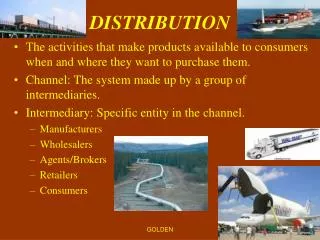
Channels of distribution • …are the paths of ownership that goods follow as they pass from the producer to the consumer • Channel selection • deciding what path a product should take to reach the target consumer • Logistics • arranging for the product to move efficiently, safely, cheaply, and quickly
Distribution Policies • Intensive • Selective • Exclusive • Integrated
Intensive Distribution • Used if the product is sold everywhere • Ex: Coca-cola is found in schools, bus stations, parks, malls, arenas, cafeterias, grocery stores, drugstores, retail outlets, planes, trains, movie theatres, restaurants, etc.
Selective Distribution • Try to control the distribution of their product • May seek to avoid conflicts in positioning/brand image • If a retailer orders a manufacturer’s product, by law the manufacturer cannot refuse to sell the product to the store without a valid reason
Exclusive Distribution • The manufacturer has made a deal with one or two retailers in a particular area to sell the manufacturer’s product exclusively • This allows the product to have a prestige image and allows the manufacturer to dictate some of the retail strategies. • Ex: High fashion clothing, famous-name watches, luxury giftware
Integrated Distribution • In this case a manufacturer, distributor, or retailer owns both distribution outlets and manufacturing facilities for a product • Ex: IKEA, Lee Valley tools – own and operate their own manufacturing & retail stores
Questions • Pick an item you have on you right now • What distribution channels do you think it took to get to you? • Think of an example for each of the four types of distribution strategy • How do you think e-commerce has affected distribution – especially Exclusive distribution? • Find three examples of products that use both traditional and e-commerce distributions.
Questions • List as many sources/places from which you could buy a product (any product). • Mini case. Working in groups of 3, create a new product. Tell me about the product and who it is targeted towards. Finally, choose a distribution strategy(ies )for your product. Present your idea to Mr. Brunton.