Building Collaborative Working Groups
The University of Redlands focuses on empowering students through effective collaboration across departments. This presentation outlines essential strategies for understanding disability rights and accommodations in higher education, emphasizing the importance of education, awareness, and support. Key points include the updated ADA guidelines, roles of evaluators, documentation requirements, and a commitment to inclusivity via Universal Design. Join us in fostering an environment where all students can thrive academically irrespective of their disabilities.

Building Collaborative Working Groups
E N D
Presentation Transcript
Amy Wilms, Assistant Dean of Academics and Student Life Ruben Robles, Associate Dean of Student Life Building Collaborative Working Groups
University of Redlands • Private Liberal Arts College, Southern California • 2300+ Students, College of Arts & Sciences, Undergraduate, Graduate Music & Communicative Disorders, and Geographic Info. Systems (GIS) • School of Business, School of Education Teaching Credential, Masters, and Ed.D programs
Model • Why? Education, Awareness, and Access • What? Collaboration and Support for Student Success • How? The Following Presentation
Important Points to Remember Adaaa 2008 Changes University of Redlands “Yes when we can – no when we have to” Scott Lissner Testing less than 3 years & Mental Health is case-by-case Evaluator is qualified to make the diagnosis Evaluation clearly indicates a disability covered under ADA Test scores are included Evidence to support claim of disability Documentation and explanation supports why or why not – accommodations Documentation has: ED./Med./ Dev./Soc./Fam. Hx. – relevant • Lower threshold. • Expanded definition: “learning, reading, concentration, thinking”. • Mitigating measures are not to be included in disability determination BUT can be used when looking at accommodations. • Episodic or in remission is a disability. • No “cherry picking” documentation.
Important Points to Remember ETS -guidelines ETS - Accommodations Basic Testing Accommodation Time and a half Additional rest breaks Extensive Testing Accommodations Double time Reader Scribe or keyboard entry aid Separate room for testing Calculator Assistive technology • Qualifications of Evaluator • Recency of the Documentation • Basic Testing Accommodations • Extensive Testing Accommodations • Document Update • Appropriate Clinical Documentation to Support the Disability • Evidence to Support Rationale for Accommodation Need • Supplemental Sources of Info
Highlights to Emphasize • Colleges remotely resemble the HS system. IEPs and 504s expire at graduation. • The student is responsible for the entire disability process and accommodations. • Colleges are basically required to provide access to their programs. • Colleges are not to discriminate on the basis of having a disability. • The law allows colleges to decide what their documentation and eligibility requirements are. • Emphasize that colleges are not required to raise the student’s academic performance to that of their peers. • Colleges cannot offer accommodations that fundamentally alter the academic program. • Colleges are not required to provide personal accommodations. • Parents are not allowed to make the accommodation request for their student.
Bermuda Triangle STUDENT
The “LAWS” we live with! • Privacy vs. Confidentiality • Attorney • Medical (e.g., psychological) • Clergy • Spouse • News Reporter (source) • Educational Records • Exemptions • Parent notification • HIPAA – Confidentiality • Electronic • Doctor – to – Doctor • FERPA vs. HIPAA • All or nothing
Services for Students with Disabilities – and everyone else!!! • Universal Design • Initially seen in architecture, a concept that designing inclusively will positively affect all. • Goes beyond accommodating the person with the disability by providing greater access to all. • Example of Universal Design in the physical environment: • Curb cuts for bikes, strollers, shopping carts, and rolling suitcases. • Example of Universal Design in the learning environment: • Providing information in multi-modal formats (print, orally, electronically, etc).
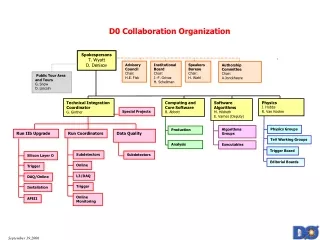
Collaborative Groups • Academic Affairs & Student Life • Accommodations Committee • Admissions • Behavior Assessment Team • Ad Hoc Committee – Disability • Academic Review Board • Registrar’s Council
Group Trainings • Public Safety • Admissions • Residence Life • First Year Seminars • Department Chairs (Faculty Retreat)
Resources • Amy Wilms (909.748.8108) or amy_wilms@redlands.edu • Ruben Robles (909.748.8053) or ruben_robles@redlands.edu • The ADA Coordinator’s Guide to Campus Compliance. LPR publications, 2nd edition (2005). • Association on Higher Education and Disability • http://www.ahead.org • Information about laws, resources, jobs, etc: • http://www.disability.gov • http://www.ncd.gov/ • http://www. justice.gov • Educational Testing Service • www.ets.org/disabilities