Water Quality Testing
Water Quality Testing. Ms. DC and Ms. Arya. What should we test our water for??. What is Turbidity?. Measurement of how clear the water is Unclear water is said to be “turbid.” Turbidity is caused by matter such as clay, silt, and other material in the water

Water Quality Testing
E N D
Presentation Transcript
Water Quality Testing Ms. DC and Ms. Arya
What is Turbidity? • Measurement of how clear the water is • Unclear water is said to be “turbid.” • Turbidity is caused by matter such as clay, silt, and other material in the water • Could be the result of soil erosion, run-off, and algal blooms
Test Your Water Turbidity 1. Pour 25 mL of water into the turbidity beaker. 2. Use the Secchi disk to measure turbidity
What are Phosphates? • Phosphates come from phosphorus, a plant nutrient • Frequently found in run-off from construction • Used as a fertilizer for landscaping
Phosphates • Can cause algal blooms which remove oxygen from the water • Over HALF of all phosphates in water come from household detergents
Testing Your Water for Phosphates 1. Using the 25 mL from turbidity testing, pour 5 mL into a test tube. 2. Add one Phosphorus TesTab. 3. Cap the tube and mix until tablet dissolves. Wait for 5 minutes.
What are nitrates? • Nitrates come from nitrogen, a nutrient that helps plants grow • High levels of nitrates cause aquatic plant and algal blooms which remove oxygen from water • Unpolluted waters usually contain about 4 parts per million of nitrates • Above 40 parts per million is unsafe for drinking
Nitrates • Nitrates get into our watershed by • Human and Animal wastes • Decomposing organic matter • (matter that was once living breaking down) • Lawn and crop fertilizer run-off
Test Your Water for Nitrates 1. Using the water from the turbidity experiment, pour 5 mL of water into a clean test tube 2. Add one Nitrate #1 TesTab. Cap the tube and mix until tablet dissolves 3. Add one Nitrate #2 CTA TesTab. Cap tube and mix. 4. Wait 5 minutes.
What is Dissolved Oxygen? • Just like animals on land, aquatic animals need oxygen to live • Oxygen is dissolved in the water • Algal blooms use up all the oxygen leaving little for the animals in the water
Testing Your Water for Dissolved Oxygen 1. Pour 5 mL of water into the test tube. 2. Put one TesTab into the tube and dissolve the tablet. 3. Compare the color the water turns to the chart.
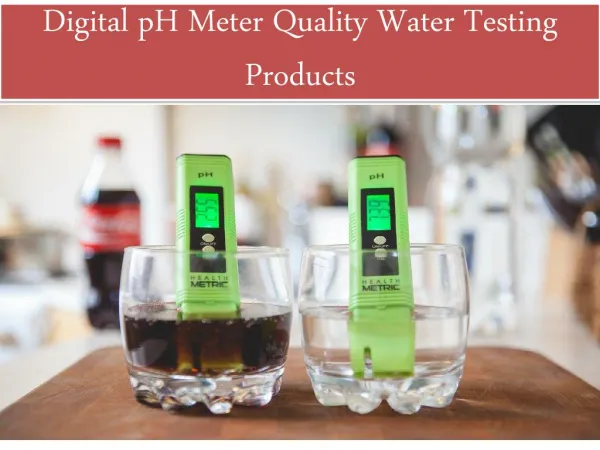
What is pH? • One of the most common water tests • Results tell you how basic or acidic the water is • A pH range of 6.5 to 8.2 is healthy for most organisms • Blue Crabs need a pH of 8.0 • Rapidly growing algae can increase the pH of water
Measure Your Water’s pH 1. Pour 10 mL from the turbidity experiment into a test tube 2. Add one pH Wide Range TesTab 3. Cap the tube and mix until the tablet is dissolves. 4. Compare to color chart.
Coliform Testing • Coliform is a group of bacteria that is commonly found in animal feces • High coliform amounts can result in disease in aquatic animals as well as people swimming in that water
Testing Your Water for Coliform • Write your name on your nutrient agar plate • Dip a sterile swab into your water • Streak your nutrient agar plate • Put your plate in the middle of the table • Ms. DC will put your plate in an incubator (37°C) overnight. You will look at your plates tomorrow.