Path to Responsible Citizenship: Duties, Voting Engagement, and Colonial Insights
200 likes | 307 Views
Explore the essential duties of a good US citizen and implement strategies to enhance voter turnout in your community. Engage in discussions about the obligations such as obeying laws, paying taxes, and participating in jury duty. Analyze historical context by looking at the New England, Middle, and Southern colonies, understanding their economies, governance, and social issues. Identify the characteristics and contributions of the colonies to American identity, including key concepts like the Second Great Awakening and the plantation system. Foster civic responsibility for a better future.


Path to Responsible Citizenship: Duties, Voting Engagement, and Colonial Insights
E N D
Presentation Transcript
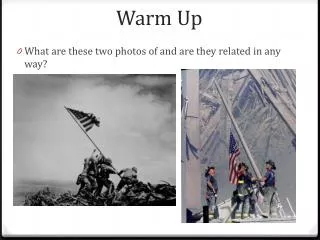
Warm Up • Do you think you are/or plan to be a good US citizen? • Why/why not? • How are you going to achieve this?
Duties • With a partner, brainstorm what you think your duties are as a citizen of the United States. • List at least 5
Don’t break the laws! • Pay your taxes! • Register for/serve jury duty! • Go to School! • Sign up for selective service! • Register to vote and actually vote! • Be aware of what is going on (political activism)
Reported Voting and Registration, by Race, Hispanic Origin, Sex, and Age, for the United States: November 2010 31% of total Population did not vote! Source: U.S. Census Bureau, Current Population Survey, November 2010.
Create a plan! • With a neighbor, come up with a plan to increase voter turnout. • To start, try and identify why people do not vote. • Must have at least 5 possible solutions!
Possible Solutions • Make Election Day National Holiday • Make it a Weekend • Text Voting • “Drive Thru” voting • Extend Poll Hours • Tax Breaks • “Bicandidates” (able to vote for more than one person in a party) • No electoral college
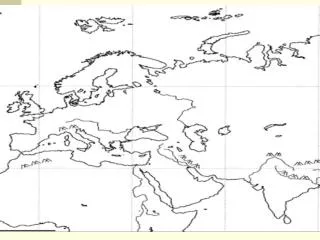
“The English Colonies” • What do you think of when you hear “colony”?
New England Colonies • “Up north” • Pilgrims arrive at Plymouth Bay • Mayflower • Economy • Rocky, Cold Weather • What do you think they focused on for money? • Mass., Connecticut, RI, NH.
Important Facts about New England Colonies • Pilgrims vs. Puritans • Seeking religious freedom (Pilgrims) • Reform/”Purify” society • Wrote the Mayflower Compact • First form of direct democracy (still seen in New England town meetings) • Religious Dissent • Breaking away • Puritans, Quakers • Fundamental Orders of Connecticut • Elected officials serve • 1st written constitution • Relied on INDUSTRY
The Middle Colonies • New York, Delaware, Pennsylvania, New Jersey • Mixed economy • Religious Dissenters
The Middle Colonies • Proprietary Colony • Owned by a person • Usually of great influence • Controlled Everything • NY (Originally owned by the Dutch) • Pennsylvania (William Penn) • Quakers (religious freedom) • Royal Colony • Owned and ruled by the king • New Jersey • Staple Crops • Used for food • Wheat
Southern Colonies • Georgia, NC,SC, Virginia, Maryland
Southern Colonies • Charter Colonies • Colonies owned by a company • Virginia Stock Company • Cash Crops (used for selling) • Rice, Tobacco, Indigo, Cotton • Maryland Toleration Act • Tolerance for other religions • Jamestown (VA) • 1st permanent settlement in N. America • Charter Company • House of Burgesses • 1st representative Assembly • Kind of like 1st form of official government
Closure • Identify 1 of 2 • 3 duties required to be a true citizen • Characteristics of the Northern Middle, and Southern Colonies
Key facts about the South… • Indentured servants came before slaves • Work for shelter, food, and clothing for a set period of time • Plantation system • Agriculture • Required slaves • Triangular Trade • Pattern of trade among America, Europe and Africa
Raw Goods Refined Goods Slaves
American Identity • Second Great Awakening • Religious Revival • Baptists and Methodists emerge • Gave America a religious identity. • Egalitarianism emphasized • Equality • Salutary Neglect • England used colonies for wealth and gave no help
Closure • Identify 4 of 6: • Triangular trade, egalitarianism, the Second Great Awakening, salutary neglect, indentured servants, plantation system