Exploring Class Structures: From Medieval to Modern Society
This text delves into the evolution of social class systems from medieval times to contemporary America. It highlights the rigid class structures of medieval and Indian societies, where social standing was largely determined by landownership and birth, making upward mobility nearly impossible. In contrast, the Victorian era introduced a slightly more fluid system influenced by wealth and prestige, allowing for some movement. Today, America embodies a more dynamic class system where wealth predominantly dictates social standing, presenting new opportunities for upward mobility.


Exploring Class Structures: From Medieval to Modern Society
E N D
Presentation Transcript
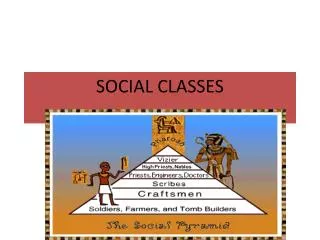
Social Classes I am still a little afraid of missing something if I forget that, as my father snobbishly suggested, and I snobbishly repeat, a sense of the fundamental decencies is parceled out unequally at birth.
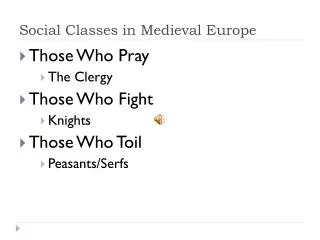
Medieval Society • Rigid class structure • Determined by landownership and birth • Movement through marriage and sometimes acquiring land
Indian Society • Extremely rigid system • Class and career determined by birth • Nearly impossible to move up
Victorian Society (Marx) • Less rigid system • Determined by wealth and prestige • Movement possible, but difficult
America Today? • Fluid system • Determined by wealth • Easy to move up