Forming the Future Tense in Spanish: Simple Rules and Irregular Verbs
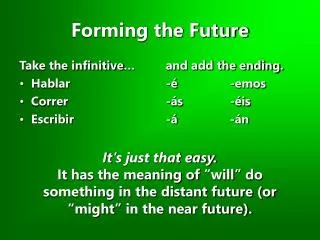
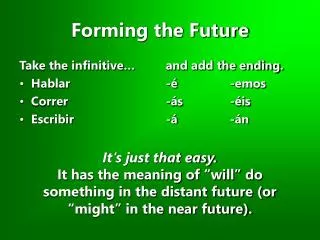
Understanding how to form the future tense in Spanish is essential for expressing future actions. It's straightforward: take the infinitive form of the verb (like hablar, correr, escribir) and add the future endings -é, -emos, -ás, -éis, -á, -án. The future tense conveys the meaning of "will" or "might" in reference to future events. However, watch out for the irregular verbs that have modified stems: podr- (poder), sabr- (saber), querr- (querer), and more. Master these rules to enhance your Spanish communication skills!

Forming the Future Tense in Spanish: Simple Rules and Irregular Verbs
E N D
Presentation Transcript
Take the infinitive… Hablar Correr Escribir and add the ending. -é -emos -ás -éis -á -án Forming the Future It’s just that easy.It has the meaning of “will” do something in the distant future (or “might” in the near future).
NOT… poder- saber- querer- poner- tener- venir- salir- decir- hacer- But… podr- sabr- querr- pondr- tendr- vendr- saldr- dir- har- Irregulars