Download
1 / 12
160 likes | 418 Views
Galactosemia is a genetic disorder characterized by an excess of galactose in the blood due to the absence of the GALT enzyme responsible for converting galactose into glucose. Common types include Classic Galactosemia and Duarte Galactosemia, with variable enzyme activity. Diagnosis typically occurs within the first week of life through newborn screening. Untreated, it can lead to severe complications such as liver enlargement, cataracts, and learning disabilities. Managing the condition involves strict dietary restrictions to avoid galactose-containing foods, especially dairy.

E N D
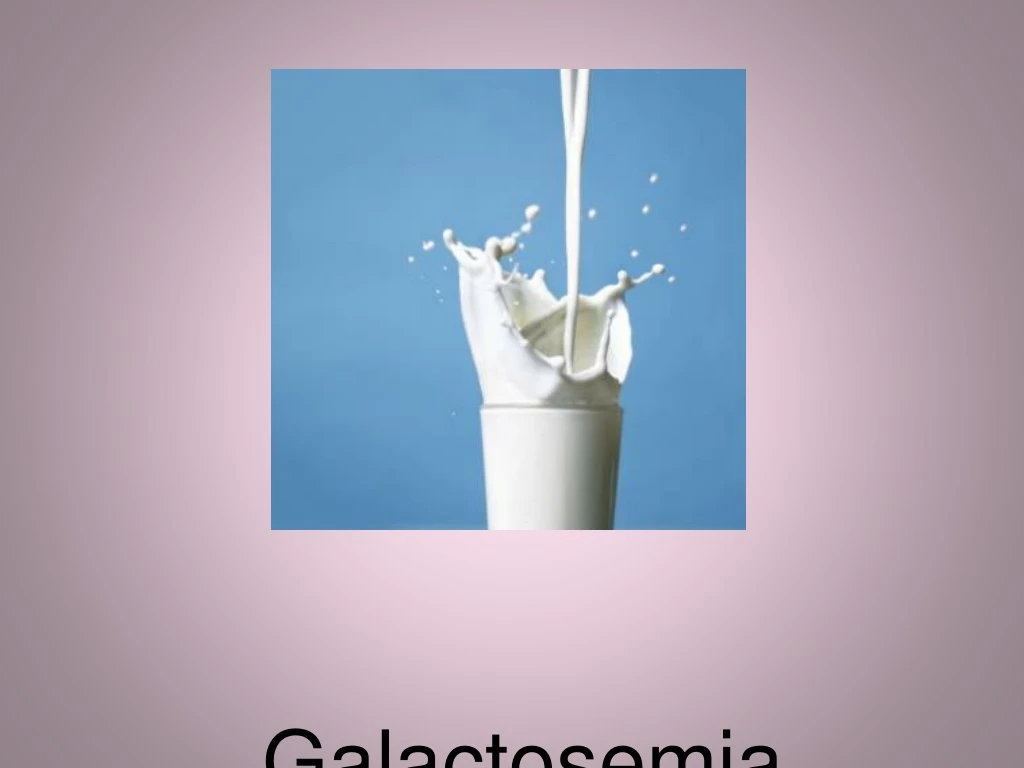
What is Galactosemia? • Galactosemia: “too much galactose in the blood”. • When a person consumes dairy (which has lactose in it) the body will break it down into galactose and glucose) • Common Galactosemia • Individual is missing the enzyme GALT to convert galactose into glucose
Types of Galactosemia • 1) Duarte Galactosemia • 1 classic Galactosemia gene and 1 Duarte gene • “D/G” • 25-50% of GALT enzyme activity • Controversy over whether they need diet restriction or not. • 2) Galaktokinase Deficiency (Type II Galactosemia) • Deficient in Galactokinase (GALK) enzyme. • Problems often mild, usually child cataract formation.
Testing for Galactosemia • Prenatal diagnosis is available • Amniocentresis • Diagnosis is usually within the first week of life • Heel prick (standard newborn testing)
Complications and Treatment • Up to 75% of infants will die from it. • If left untreated • Enlarged liver • Kidney failure • Cataracts • Brain damage • Learning disabilities • Speech trouble • Premature Ovarian Insufficiency (POI) • Under 40, ovaries not producing estrogen. • Treated with diet restriction
Who Has Galactosemia? • The child with classic Galactosemia inherits the Galactosemia gene from both parents. • “(G/G)”
Unacceptable Foods • Butter • Nonfat Milk • Milk • Nonfat Dry Milk • Buttermilk • Cream Milk • Chocolate • Cheese • Buttermilk Solids • Nonfat Dry Milk Solids • Milk Derivatives • Dried Cheese • Milk Solids • Lactose • Casein • Sour Cream • Dry Milk • Whey and Whey Solids • Dry Milk Protein • Yogurt • Organ Meats (liver, heart, kidney, brains, sweetbreads, pancrease) • Sodium Caseinate • Calcium Caseinate • Tragacanth Gum • Lactostearin • Lactalbumin • Dough Conditioners • Hydrolyzed Protein (canned meats) • Margarine • MSG (monosodium Glutamate) • Soy Sauce (fermented) *** Ingredient labels are key***
Fruits, legumes, and Vegetables • Some fruits such as watermelon, papaya, and dates contain more than 10 mg Galactose/ 100 g of food and should be used in moderation. • Some vegetables such as tomatoes and bell peppers also contain 10 mg • Garbanzo bean, as well as some other legumes contain an unacceptable amount of Galactose.
Baby Foods • Similac Soy • And other soy based formulas • Most Gerber, Beech-Nut, and Heinz baby foods • No dinner or yogurt based
Possible Foods • Seeds and nuts • Milk-free cereals (cheerios) • Eggs • PB&J • Pasta (with oil) • Hamburgers • Milk-free breads
Helpful Organizations • Galactosemia Foundation • http://galactosemia.org/ • Daily Strength • Galactosemia online support group • http://www.dailystrength.org/c/Galactosemia/support-group • Parents of Glactocemic Children Inc. • http://www.geneticalliance.org/organization/parents-galactosemic-children-inc
References • Abbott nutrition. (2010, November). Understanding galactosemia: A diet guide. Retrieved from http://galactosemia.org/PDFs/UnderstandingGalactosemiaDietGuide3.pdf • Cozzo, T. (2008, August 15). Galactosemia food information cooperative. Retrieved from https://home.comcast.net/~tfcozzo/food/index.htm • State of Californiadepartmetof health services. (1997). Parents' guide to galactosemia. Retrieved from http://www.cdph.ca.gov/programs/nbs/Documents/NBS-ParentsGuideGalacPart21997.pdf • The galactosemia foundation. (2012). Understanding galactosemia . Retrieved from http://galactosemia.org/Understanding_Galactosemia.php