Understanding Invertebrates: Diversity and Characteristics
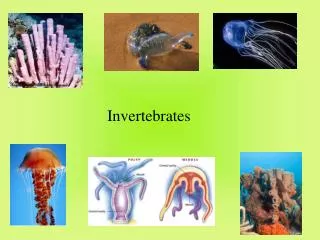
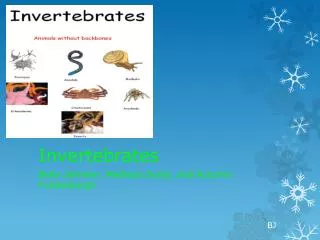
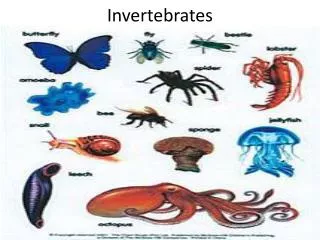
Invertebrates are fascinating animals that lack a backbone or skeleton. They vary in size from tiny creatures to gigantic species and have diverse body coverings, including shells and exoskeletons. Most invertebrates have symmetrical body shapes, but some are irregular. They inhabit various environments, including oceans, freshwater, and land, and can either move freely or attach to surfaces. Many invertebrates are oviparous, laying eggs that hatch into larvae. Major groups include sponges, cnidarians, worms, echinoderms, molluscs, and arthropods, such as insects and crustaceans.

Understanding Invertebrates: Diversity and Characteristics
E N D
Presentation Transcript
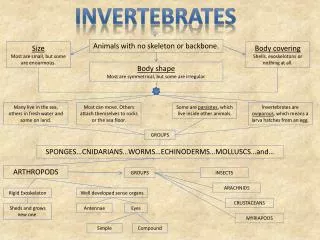
INVERTEBRATES Animalswith no skeletonorbackbone. Size Most are small, butsome are enourmous. Bodycovering Shells, exoskelotonsornothing at all. Bodyshape Most are symmetrical, butsome are irregular. Manylive in the sea, others in freshwater and someonland. Most can move. Othersattachthemselvestorocksorthe sea floor. Some are parasites, whichliveinsideotheranimals. Invertebrates are oviporous, whichmeans a larva hatchesfromanegg. GROUPS SPONGES…CNIDARIANS…WORMS…ECHINODERMS…MOLLUSCS…and… ARTHROPODS GROUPS INSECTS ARACHNIDS RigidExoskeleton Welldevelopedsenseorgans CRUSTACEANS Sheds and grows new one. Antennae Eyes MYRIAPODS Simple Compound
INVERTEBRATES Animalswith no skeletonorbackbone. Size Most are small, butsome are enourmous. Bodycovering Shells, exoskelotonsornothing at all. Bodyshape Most are symmetrical, butsome are irregular. Manylive in the sea, others in freshwater and someonland. Most can move. Othersattachthemselvestorocksorthe sea floor. Some are parasites, whichliveinsideotheranimals. Invertebrates are oviporous, whichmeans a larva hatchesfromanegg. GROUPS SPONGES…CNIDARIANS…WORMS…ECHINODERMS…MOLLUSCS…and… ARTHROPODS GROUPS INSECTS ARACHNIDS RigidExoskeleton Welldevelopedsenseorgans CRUSTACEANS Sheds and grows new one. Antennae Eyes MYRIAPODS Simple Compound
INVERTEBRATES Animalswith no skeletonorbackbone. Size Most are small, butsome are enourmous. Bodycovering Shells, exoskelotonsornothing at all. Bodyshape Most are symmetrical, butsome are irregular. Manylive in the sea, others in freshwater and someonland. Most can move. Othersattachthemselvestorocksorthe sea floor. Some are parasites, whichliveinsideotheranimals. Invertebrates are oviporous, whichmeans a larva hatchesfromanegg. GROUPS SPONGES…CNIDARIANS…WORMS…ECHINODERMS…MOLLUSCS…and… ARTHROPODS GROUPS INSECTS ARACHNIDS RigidExoskeleton Welldevelopedsenseorgans CRUSTACEANS Sheds and grows new one. Antennae Eyes MYRIAPODS Simple Compound