Download
1 / 4
0 likes | 2 Views
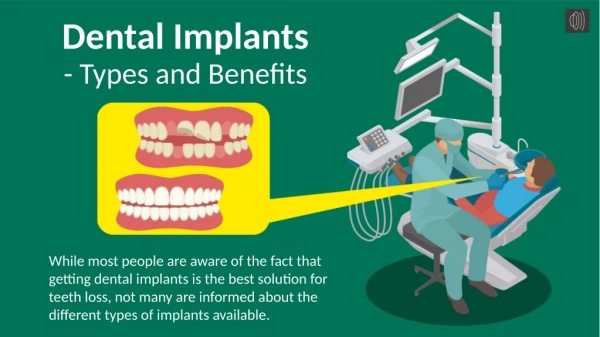
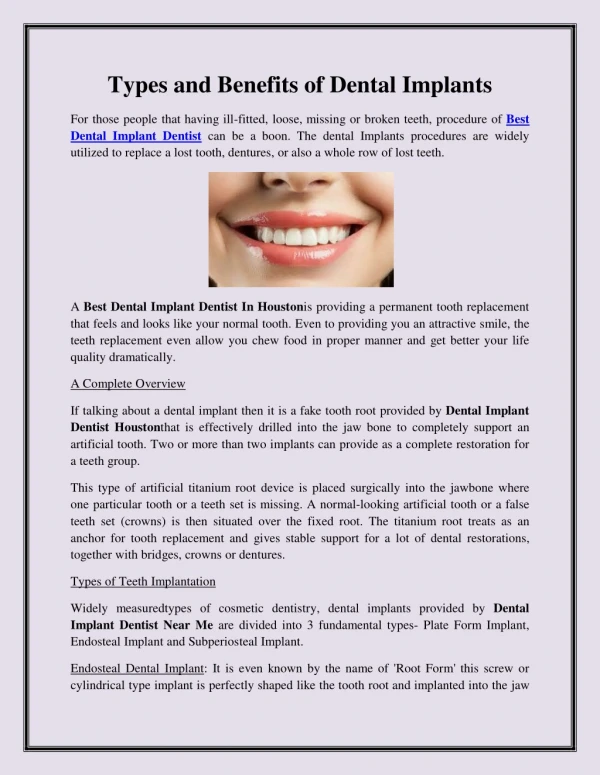
Dental implants have revolutionized the field of restorative dentistry by offering a long-term solution for missing teeth. Unlike traditional dentures or bridges, dental implants are designed to mimic the natural structure of teeth, providing stability, functionality, and aesthetics. In this comprehensive guide, we will explore what dental implants are, their benefits, the different types available, and how to choose the right dentist for the procedure.

E N D
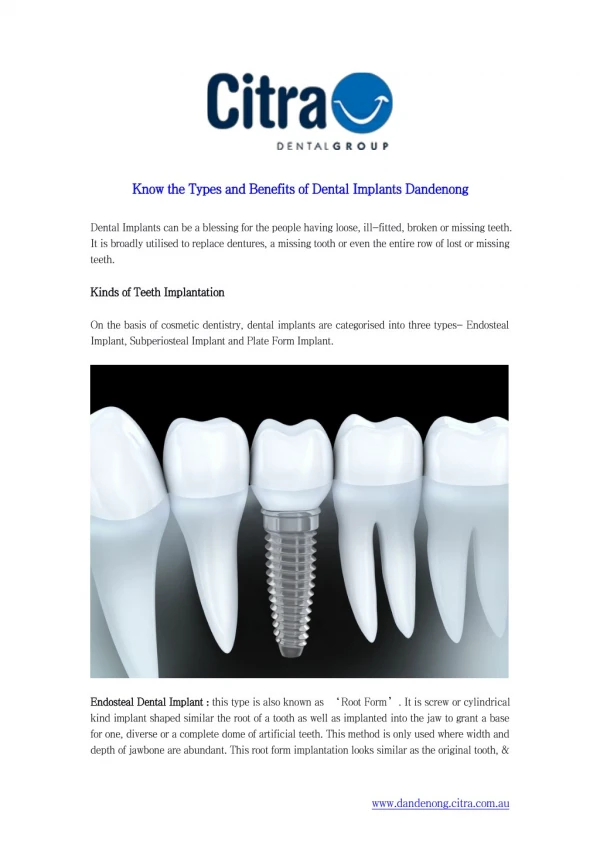
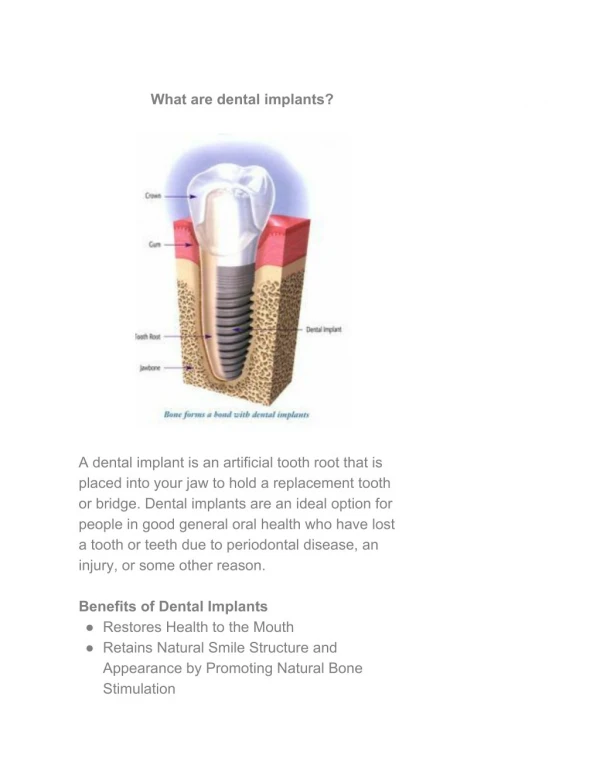
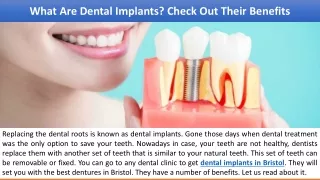
What Are Dental Implants? Benefits, Types, and How to Choose the Right Dentist – A Guide by Virat Dental Dental implants have revolutionized the field of restorative dentistry by offering a long-term solution for missing teeth. Unlike traditional dentures or bridges, dental implants are designed to mimic the natural structure of teeth, providing stability, functionality, and aesthetics. In this comprehensive guide, we will explore what dental implantsare, their benefits, the different types available, and how to choose the right dentist for the procedure. What Are Dental Implants? A dental implant is a small titanium post that is surgically inserted into the jawbone to serve as a replacement root for a missing tooth. Over time, the implant fuses with the bone in a process called osseointegration, creating a stable foundation for a crown, bridge, or denture. Dental implants are typically made from biocompatible materials such as titanium or zirconia, ensuring they are safe and accepted by the body. Once the implant is fully integrated, a custom-made prosthetic tooth is attached to restore the patient’s smile and chewing function.
Benefits of Dental Implants Improved Appearance: Dental implants look and feel like natural teeth. Because they are designed to fuse with bone, they become permanent and maintain the natural contour of the face and jaw. Enhanced Comfort: Unlike removable dentures, implants are fixed and eliminate the discomfort of slipping or shifting. Better Oral Health: Implants do not require reducing other teeth, as a tooth-supported bridge does. This helps in preserving natural teeth and improving long-term oral health. Durability: With proper care, implants can last many years, and often a lifetime, making them a cost- effective solution over time. Improved Speech: Poor-fitting dentures can cause the teeth to slip, leading to slurred speech. Implants allow for clearer, more confident communication. Easier Eating: Dental implants function like natural teeth, allowing patients to eat their favorite foods without pain or inconvenience. Increased Self-Esteem: A complete, healthy smile can greatly enhance self-esteem and quality of life. Endosteal Implants Endosteal implants are the most common type and are placed directly into the jawbone. These typically consist of screw-shaped posts made of titanium. Once healed, the artificial tooth is mounted on the post. Subperiosteal Implants These implants are placed under the gum but on or above the jawbone. This option is typically used for patients who do not have enough healthy jawbone and do not want to undergo a bone augmentation procedure. Zygomatic Implants This is the least common type of dental implant and is used when there is not enough bone in the upper jaw. The implant is placed in the cheekbone (zygoma) rather than the jawbone. Initial Consultation: The dentist will evaluate the patient's oral health through X-rays or 3D images and discuss treatment options.
Tooth Extraction (if needed): Any remaining tooth or root in the implant area may be removed. Bone Grafting: If the jawbone isn’t thick enough, a bone graft may be needed to provide a solid base. Implant Placement: The titanium post is surgically placed into the bone. Healing Period: This can take several months as the bone integrates with the implant. Abutment Placement: Once healed, an abutment is placed on the implant to hold the new tooth. Crown Placement: A custom-made crown is attached to the abutment, completing the procedure. Qualifications and Experience Choose a dentist or oral surgeon who has specialized training and extensive experience in implant dentistry. Board certification and membership in professional organizations like the American Academy of Implant Dentistry (AAID) are good indicators of expertise. Technology and Techniques Used A dentist who uses modern diagnostic tools like 3D imaging, digital X-rays, and computer-guided surgery is more likely to provide precise and successful outcomes. Patient Reviews and Testimonials Reading reviews and testimonials can provide insights into the quality of care, patient satisfaction, and outcomes. Look for consistent positive feedback and successful case studies. Consultation and Communication A good dentist will offer a thorough consultation, clearly explain the procedure, and answer all questions. They should also provide a detailed treatment plan, including cost, timeline, and recovery expectations.
Office Environment and Staff A welcoming, clean, and well-equipped dental office with friendly staff can significantly enhance the patient experience. Pay attention to the professionalism and support provided during your initial visit. Financial Options Implant procedures can be costly. Ensure the dentist offers transparent pricing and financing options. Some practices also work with insurance providers or offer in-house payment plans. Post-Procedure Care Inquire about the post-operative care and follow-up services. A responsible dental practice will provide comprehensive aftercare instructions and be available for any concerns.