Mammals
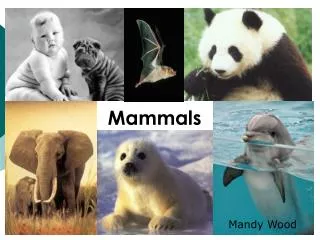
Mammals are warm-blooded vertebrates characterized by hair or fur for insulation, live births, and nursing their young with milk. They have advanced adaptations for feeding, including specialized teeth (incisors, canines, molars) and limbs for various types of movement, such as running or swimming. Mammals exhibit internal fertilization and care for their young, ensuring a greater chance of survival. Their survival strategies include physical traits like claws or horns, behavioral adaptations, and intelligence. This fascinating group also includes monotremes, marsupials, and placental mammals.


Mammals
E N D
Presentation Transcript
Mammals Pages 486-494 in book.
Description • Hair/fur for warmth. • Give birth to live young. • Feed their young milk. • Endothermic: regulate body temp with hair, fat, sweating, shivering, and goosebumps.
Adaptations for eating • Carnivore, omnivore, herbivore • Claws • Behavioral adaptations: hunting • Three types of teeth: • 1. incisors: cut food • 2. canines: stab and tear food • 3. molars: grind food into tiny bits
Reproduction • Internal fertilization • Young are born alive • Have few babies, but provide a lot of care to raise them to adults Video: lifecycle Video: live young
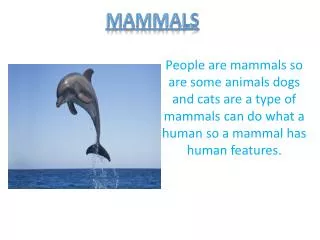
Movement • Most have legs for walking, running, or hopping. • Aquatic mammals have fins/flippers for swimming.
Adaptations for survival • Teeth, claws, and or horns to fight • Hide/camouflage run away • Intelligence
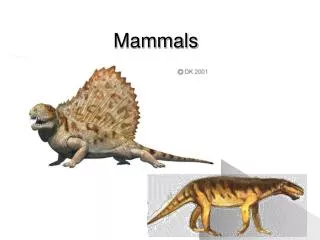
Other • Mammals include monotremes (egg laying), marsupials (have pouches), placental (have placenta for young). • Believed to have evolved from reptiles around 220 mya.