Download
1 / 6
60 likes | 187 Views
The grey wolf, once nearly extinct across 48 states, faces ongoing threats from hunting and habitat loss. Farmers historically viewed them as threats to livestock, leading to their persecution. Wolves prey on medium to small animals, contributing to ecosystem balance. However, they can also spread diseases like rabies and various plagues. Their role as top predators is crucial for maintaining healthy environments. Conservation efforts are underway, including wildlife reserves and legal protections, to help the grey wolf recover its populations.

E N D
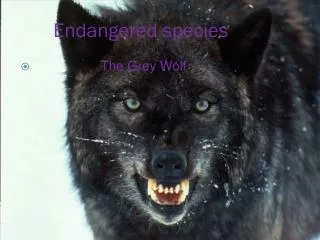
Endangered species • The Grey Wolf
The grey wolf be came almost extinct in 48 states. Farmers would hunt and persecute the wolf because they believed the wolfs caused a widespread livestock loss. Also are hunted for sport. What harms it?
there diet Medium and small sized animals preyed on by wolves include : rabitts, ground squirl, mice, foxes, and some times eat animals 10-15 times larger then them selfs.
Diseases • Because wolves travel great distances, they may play an important role in spreading and maintaining diseases in certain areas. Infectious diseases spread by wolves include bangs disease, pahvant valley plague, listeriosis, and anthrax. Wolves may also suffer from rabies. wolves are a major host for the disease in Russia, Iran, Afghanistan, Iraq and India.
Importance • Wolves are found at the top of the food chain in the forest. • Wolves also keep the balance of old and sick animals. • If wolves disappear then hundreds will be affected by this.
Protection • There are tons of wildlife reserves helping them gain there numbers back up. • Its illegal to hunt the gray wolf and can be find a lot of money. • They are also in captivity to help repopulate the grey wolves.