Understanding Elder Abuse: Types, Risks, and Care Needs in Correctional Settings
100 likes | 281 Views
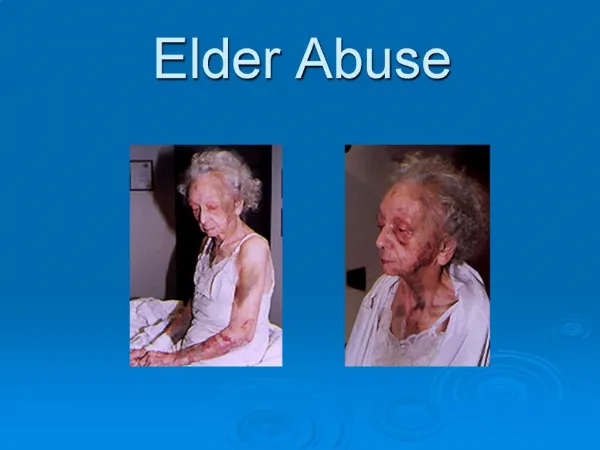
Elder abuse is a critical issue affecting vulnerable populations, particularly in both domestic and institutional settings. Types include physical, sexual, emotional, and financial abuse, along with neglect and self-neglect. In the context of corrections, older inmates face unique risks, such as healthcare access issues and vulnerability to victimization. Specialized care environments and programs are essential to address the needs of elderly inmates. This article explores the various forms of elder abuse, the challenges faced by this population, and the importance of comprehensive care strategies.


Understanding Elder Abuse: Types, Risks, and Care Needs in Correctional Settings
E N D
Presentation Transcript
Elder Abuse Jessica van Waardenburg
Types of Elder Abuse • Physical Abuse • Sexual Abuse • Emotional/ Psychological Abuse • Neglect • Abandonment • Financial/Material Exploitation • Self- neglect U.S. Administration on Aging, National Center on Elder Abuse
Categories of abuse • Domestic • Perpetrated by someone who has a relationship with the elder such as a family member, spouse, or caregiver. • Occurs within the home of the elder. • Self-neglect • Excludes those who are self-neglecting due to mental illness. • Institutional • Geriatric Care Facilities • Prisons
The Graying of the prison Population • Inmates can be considered elderly in their upon reaching age 50 • The actual age depends on the state and/or the correctional facility because there are no standards. • Three groups: • Prisoners who age while incarcerated • Effects many due to changes in sentencing laws. • Prisoners sentenced at older ages • Constitutes 50% of elderly inmates. • Aging recidivists
Reasons they are more at risk • Lack of access to healthcare • Chronic illness • Mental illness (incl. Alzheimer's & Dementia) • End of life care • Lack of preventative care • Proper education • Exercise • Healthy Eating • Vulnerable to victimization • Re-entry into society much more difficult.
Issues to Ponder • Integration vs. Segregation • Institutional setting vs. Non-custodial settings • POPS-Project for Older Prisoners • Cost of providing health care. • $60-70,000 per elderly inmate in to $27,000 per person in the general population.
Specialized Care • Oregon State Correctional Institution, Unit 13 • Protective environment for elderly inmates with functional needs. • State Correctional Institution at Laurel Highlands, Pennsylvania • Specialized prison for elderly inmates. • Marysville, Ohio Women’s Correctional Facility • Provides education on the aging process • Pre-release planning • Gardening Club
References • Gillilland, M. (2007). Continuing Education: Elder Abuse. The Journal of Practical Nursing, 57(3), 5-9. • Stojkovic, S. (2007). Elderly Prisoners: A Growing and Forgotten Group Within Correctional Systems Vulnerable to Elder Abuse [Electronic version]. Journal of Elder Abuse & Neglect, 19(3/4). doi: 10.1300/J084v19n03_06. • United States Administration on Aging. National Center on Elder Abuse. Major Types of Elder Abuse. Retrieved November 20, 2008 from: http://www.ncea.aoa.gov/NCEAroot/Main_Site/FAQ/Basics/Types_Of_Abuse.aspx. • U.S. Department of Justice. National Institute of Corrections. Correctional Healthcare: Addressing the Needs of the Elderly, Chronically Ill, and Terminally Ill Inmates. Retrieved November 20, 2008 from: http://www.nicic.org/pubs/2004/018735.pdf.