Download
1 / 10
100 likes | 223 Views
The framework addresses high-risk exposure in Caribbean agriculture due to agro-climatic factors, complex environmental processes, and socio-economic changes. It explores old risks like weather, price variability, and new risks such as climate change and biosafety concerns. Currently, Jamaica experiences significant losses from natural disasters, with an annual expenditure of $1.5-$2 million on hurricane damages alone. The framework proposes a comprehensive risk management strategy involving public sector roles, risk assessments, mitigation measures, and enhanced support for vulnerable farmers to improve resilience against agricultural risks.

E N D
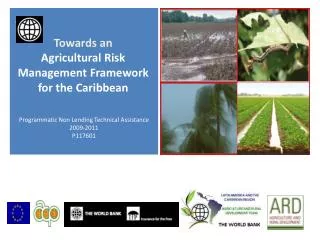
Towards an Agricultural Risk Management Framework for the Caribbean Programmatic Non Lending Technical Assistance 2009-2011 P117601
Caribbean Agriculture: High Risk Exposure • Risk + uncertainty widespread in agrifood system: • Agro-climatic factors • Complex biological/environmental processes • Geographical span of supply chains • Political economy of food/agriculture • Major structural and demographic changes • Risky business = ‘old risks’ + ‘new risks’ • ‘Old Risks’: weather, price variability, pests, logistical bottlenecks, food safety hazards, policy shifts • ‘New Risks’: climate change, new disease transmission, biosafety, bioterrorism, environmental imprint + social concerns
Agriculture is sensitive to Risks • Note: X axis = years; Y axis = boxes of production; JBM = Jamaican Blue Mountain; and NBM = Non Blue Mountain (Low lands) Cat = hurricanes
Jamaica spends US$1.5 - 2.0 m a year for hurricane damages alone Only direct damages We estimate that over the past 10 years the Government and Donors have spent a yearly average of US$1.5 to 2 Million in post disaster support, in Response to agriculture average yearly direct damages of US$100 million.
Current Catastrophe Risk Management System in Agriculture • Catastrophe coverage for small vulnerable farmers is ex-post, and with slow response. • Commodity Boards and/or individual farmers have no instruments for transferring risks. High vulnerability to natural disasters !!
Components of a Risk Management Framework for Agriculture 1 Identify Objectives/ target Social vs commercial objective Target groups: - Traditional farming sector - Emerging farming sector - Commercial farming sector - Subsistence farming sector 2 Agricultural Risk Assessment Risk identification Risk quantification Vulnerability Assessments Risk Prioritization 4 Resources Data management Regulatory/supervisory framework Information and education Technical expertise Program administration and monitoring 3 Risk Management Strategy Prevention Transfer Coping Strategies are client/supply chain/country specific
Identifying the Role of Public Sector • Assuming Catastrophic layers in an ex-ante approach • Services and investments for risk mitigation. • Agriculture Research & Extension • Sanitary & Phytosanitary Services • Pest Controls, • Drainage, etc • Investments for supporting private sector initiatives • Weather data reliability and access • Access to reliable agronomic information • Access to financial agro information • Training • Improving delivery channels to support small farmers after adverse catastrophic events. • Transparency • Efficiency • Accountability • Adaptation to climate change
Regional Vs Country Risk Management • Some measures are more attractive to regional approach and better to do it regionally (i.e. Sanitary and phytosanitary issues, hurricanes, etc.). • Other risks are much more country specific (logistic disruptions, price risks, exchange rate, flash flooding, droughts, etc.) • Transferring agricultural weather risks at regional level requires to meet key challenges: • Quantifying “ regional” agriculture exposure • Defining trigger payouts • Institutional delivery channels
Messages and Approach • Need to design a comprehensive Regional or Country Risk Management Strategy for Agriculture. • This RMS may include Mitigation- Transfer – Coping mechanisms and tools. • Risk Layering and Risk Financing are important • Ex Ante is better than Ex-Post • Define clear role of public sector • Supply Chains Versus Farmer level risks • Agricultural Insurance will play an important role, but it is only part of the Strategy