Download
1 / 2
0 likes | 0 Views
Simplifying Claims Administration with Artificial Intelligence and Process Automation<br><br><br>Understanding

E N D
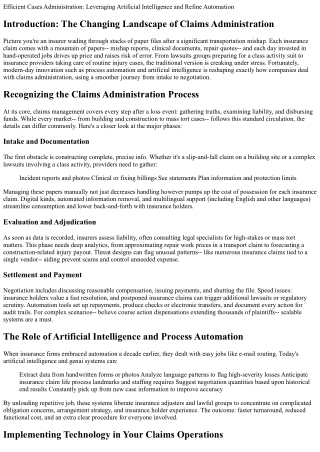
Efficient Cases Administration: Leveraging Artificial Intelligence and Refine Automation Introduction: The Changing Landscape of Claims Administration Picture you're an insurer wading through stacks of paper files after a significant transportation mishap. Each insurance claim comes with a mountain of papers-- mishap reports, clinical documents, repair quotes-- and each day invested in hand-operated jobs drives up price and raises risk of error. From lawsuits groups preparing for a class activity suit to insurance providers taking care of routine injury cases, the traditional version is creaking under stress. Fortunately, modern-day innovation such as process automation and artificial intelligence is reshaping exactly how companies deal with claims administration, using a smoother journey from intake to negotiation. Recognizing the Claims Administration Process At its core, claims management covers every step after a loss event: gathering truths, examining liability, and disbursing funds. While every market-- from building and construction to mass tort cases-- follows this standard circulation, the details can differ commonly. Here's a closer look at the major phases: Intake and Documentation The first obstacle is constructing complete, precise info. Whether it's a slip-and-fall claim on a building site or a complex lawsuits involving a class activity, providers need to gather: Incident reports and photos Clinical or fixing billings See statements Plan information and protection limits Managing these papers manually not just decreases handling however pumps up the cost of possession for each insurance claim. Digital kinds, automated information removal, and multilingual support (including English and other languages) streamline consumption and lower back-and-forth with insurance holders. Evaluation and Adjudication As soon as data is recorded, insurers assess liability, often consulting legal specialists for high-stakes or mass tort matters. This phase needs deep analytics, from approximating repair work prices in a transport claim to forecasting a construction-related injury payout. Threat designs can flag unusual patterns-- like numerous insurance claims tied to a single vendor-- aiding prevent scams and control unneeded expense. Settlement and Payment Negotiation includes discussing reasonable compensation, issuing payments, and shutting the file. Speed issues: insurance holders value a fast resolution, and postponed insurance claims can trigger additional lawsuits or regulatory scrutiny. Automation tools set up repayments, produce checks or electronic transfers, and document every action for audit trails. For complex scenarios-- believe course action dispensations extending thousands of plaintiffs-- scalable systems are a must. The Role of Artificial Intelligence and Process Automation When insurance firms embraced automation a decade earlier, they dealt with easy jobs like e-mail routing. Today's artificial intelligence and genai systems can: Extract data from handwritten forms or photos Analyze language patterns to flag high-severity losses Anticipate insurance claim life process landmarks and staffing requires Suggest negotiation quantities based upon historical end results Constantly pick up from new case information to improve accuracy By unloading repetitive job, these systems liberate insurance adjusters and lawful groups to concentrate on complicated obligation concerns, arrangement strategy, and insurance holder experience. The outcome: faster turnaround, reduced functional cost, and an extra clear procedure for everyone involved. Implementing Technology in Your Claims Operations
Changing from tradition systems to a modern claims platform can really feel challenging, yet adhering to a clear roadmap reduces the change. Take into consideration these actions: Assess your current process: map out every touchpoint, from first call to final payout. Select scalable innovations: try to find options that sustain numerous lines of business-- transport, building, item responsibility-- and incorporate with your existing plan management system. Prepare for information migration and cleaning: settling spread spread sheets and document databases pays dividends down the line. Train your group: blend classroom sessions with hands-on workshops so insurers and legal personnel feel confident making use of new tools. Action success: track key metrics like cycle time, ordinary case price, and consumer contentment to show ROI. Factoring in expense of ownership-- consisting of software application memberships, support costs, and recurring maintenance-- ensures realistic budgeting and helps warrant the financial investment to stakeholders. Getting Over Common Challenges No 2 applications are identical. Common roadblocks include: • Integration hurdles in between computerized file cpus and older underwriting systems. • Concerns around data safety and regulatory compliance, specifically in cross-border or class activity scenarios. • Resistance from groups accustomed to paper process or skeptical of AI's function in high-value claims. • Managing peaks-- like natural disaster occasions or mass tort filings-- without ballooning staffing costs. Addressing these challenges commonly means partnering with an professional in cases automation and gaining from peers. Pilot programs can show quick success and construct energy for more comprehensive rollout. Future Outlook: GenAI and Beyond Looking ahead, the following frontier BSA Claims blends generative AI with sophisticated analytics to deliver absolutely anticipating claims management. Picture an AI aide preparing settlement letters, or a system that imitates lawsuits scenarios to lead negotiation technique before a case also hits the courtroom. As these capabilities grow, insurance companies will certainly maximize the whole claim life process-- from initial notice to subrogation-- while continuously lowering danger and improving customer trust fund. Conclusion Insurance claims administration is no longer a back-office task-- it's a calculated differentiator. By incorporating artificial intelligence, process automation, and data-driven analytics, insurers and legal groups can decrease liability direct exposure, control prices, and supply quicker, fairer end results. For organizations prepared to transform their technique, BSA Claims Solutions supplies specialized knowledge and technology assistance to simplify every phase of the procedure.