Understanding Natural Selection and Evolution: Key Concepts and Evidence
This comprehensive overview delves into fundamental concepts of natural selection and evolution. It explores how natural selection shapes species adaptations, the scientific methods used to date objects from the past, and the significance of vestigial structures as evidence of evolutionary change. Additionally, it examines how the order of life on Earth, similarities in body parts among organisms, and environmental changes impact evolution. Featuring insights on Darwin’s theory and the role of mutations, this guide highlights the intricate connections between organisms and their environments.

Understanding Natural Selection and Evolution: Key Concepts and Evidence
E N D
Presentation Transcript
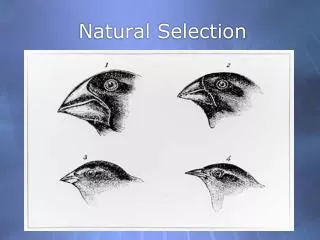
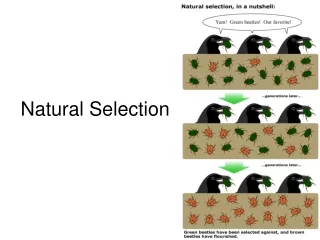
1. Natural Selection How does natural selection shape a species adaptations?
2. EVIDENCE FOR EVOLUTION How do scientists measure the age of objects from the past?
3. EVIDENCE FOR EVOLUTION How do
VESTIGIAL STRUCTURES
like an ostrich’s wings prove that organisms have changed over time?
4. EVIDENCE FOR EVOLUTION How does the order in which life appears on Earth help to prove that evolution has occurred?
8. EVIDENCE FOR EVOLUTION How do scientists interpret the presence of similar body parts between different organisms?
9. Are these body parts similar?
10. If they have the same function, are they closely related?
11. How are evolving organisms related?
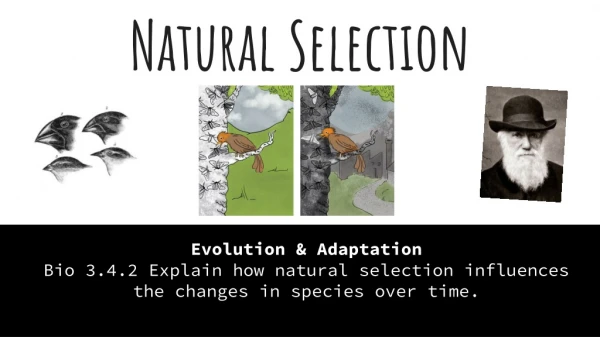
12. Natural Selection How does Darwin’s theory (Natural Selection) explain the pattern of evolution that scientists have observed?
13. Natural Selection How can changes in the gene pool of a species cause observable differences in future generations?
How are mutations important to the process of natural selection?
14. Natural Selection Why can’t an individual organism evolve through natural selection?
15. The Changing Environment How does the environment affect the evolution of a species?
16. The Changing Environment How can sudden changes in the environment cause species to go extinct?
How have human actions forced the extinction of many species?
20. Human Evolution How are humans different than our closest relatives, the primates?