Team Development and Reflection: Lessons Learned from Service Projects
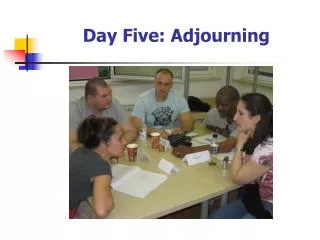
On Day Five, teams reported on their service projects, reflecting on lessons learned. After engaging activities at locations like the Café at Vine, participants shared insights on their teamwork experiences, including the values of collaboration and accountability. Key discussions included identifying behavioral changes for future engagements and determining the viability of the work site. This session emphasized the significance of team dynamics, touching on stages of development, leadership traits, and the importance of mutual support. Join us in celebrating these learning moments!

Team Development and Reflection: Lessons Learned from Service Projects
E N D
Presentation Transcript
Reports on the Service Projects • Teams report on their service projects: • Café at Vine. • Family Resources.
Team Exercise: Lessons Learned • Return to your Team Room. • What lessons did you learn from the work activity? • What lessons did you learn from the workshop overall? • How will this change your behavior on the job? • In future classes? • Return to report in one hour.
Team Reports • What lessons did you learn from the work activity? • What lessons did you learn from the week over all? • How will this change your behavior on the job? • In future classes? • Keep, change or drop this work site???
Definition of a Team(Katzenbach & Smith) A team is a small number of people with complimentary skills who are committed to a common purpose, set of performance goals, and approach for which they hold themselvesmutually accountable.
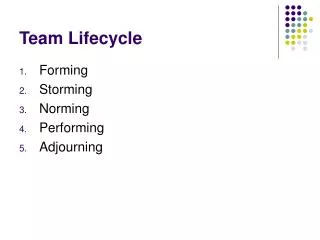
Stages of Team Development(Tuckman & Jensen) Forming Defining goals and tasks, getting acquainted. Storming Working through conflict, hostility and strong feelings. Norming Setting rules, agreeing to processes, building team cohesion. Performing Achieving results effectively and efficiently. Adjourning
The Five Dysfunctions of Teams (Lencioni) Inattention to Results Avoidance of Accountability Lack of Commitment Fear of Conflict Absence of Trust
The fast, flat and flexible organization TWENTIETH CENTURY Bureaucratic. Multi-leveled. Senior management will manage. Many complicated internal inter-dependencies. TWENTY-FIRST CENTURY • Fewer rules. • Fewer levels. • Senior management will lead, middle managers will manage. • Minimal internal inter-dependencies. Adapted from Leading Change by John P. Kotter
Traits of a Leader(James Kouzes & Barry Posner) Top Four Qualities of a Leader: 1. Honest / integrity. 2. Forward-looking / vision. 3. Inspiring / energetic. 4. Competence / effective. Bottom of the list: Independent, Ambitious.
Program Evaluation • Please complete the Program Evaluation. • Lunch. • Celebrate. • Thank You !!
www.QCLCI.com www.servantleadershipmodels.com EbenerDanR@sau.edu