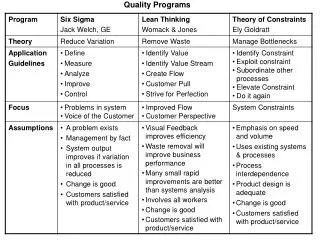
Quality Basic Skills Programs
In 2025, we proudly accept a Medal of Honor from the President of the United States for having the best Basic Skills/literacy class in the nation. This achievement prompts an exploration of what constitutes a quality Basic Skills program. We must first examine the essential components that make up such programs to understand the factors driving our success. Inspired by Alfred Perlman's insight on adaptability and evolution, it is crucial to continuously analyze and innovate our approach to empower learners effectively and meet their diverse needs.

Quality Basic Skills Programs
E N D
Presentation Transcript
Quality Basic Skills Programs Nancye Gaj Team Leader/Director of Professional Development and Instructional Support Randy Whitfield Associate Vice President of College and Career Readiness North Carolina Community College System
Activity It is the year 2025. The President of the United States has come to Raleigh to present you with a Medal of Honor for having the best Basic Skills/literacy class in the United States.
What is a quality Basic Skills program? To answer that question successfully, you have to answer another one first: “What are the components of a Basic Skills program?”
Author Unknown It is not the strongest of the species that survive, nor the most intelligent, but the one most responsive to change.
Alfred Edward Perlman, New York Times, 3 July 1958 After you've done a thing the same way for two years, look it over carefully. After five years, look at it with suspicion. And after ten years, throw it away and start all over.