Download
1 / 18
200 likes | 338 Views
This comprehensive overview highlights the organization and function of the digestive system, including the gastrointestinal (GI) tract and accessory organs such as salivary glands, liver, gall bladder, and pancreas. It discusses how nutrients are digested and absorbed, detailing cellular metabolism, the types of nutrient molecules, their functions, and how digestive disorders like GERD, stomach ulcers, and colorectal cancer affect health. Additionally, it examines the impact of diet on digestive diseases and emphasizes the importance of lifestyle modifications for prevention and management.

E N D
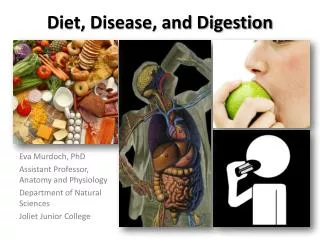
Diet, Disease, and Digestion Eva Murdoch, PhD Assistant Professor, Anatomy and Physiology Department of Natural Sciences Joliet Junior College
Organs of the Digestive System • Gastrointestinal tract (GI): mouth, esophagus, stomach, small & large intestine • Accessory organs:salivary glands, liver, gall bladder, pancreas
Functions of the GI tract and Accessory Organs • GI tract: continuous muscular tube which passes, digests, and absorbs food molecules, and eliminates the indigestible residue • Accessory organs: release digestive juices into the muscular tubule, and aid in the breakdown of nutrients
Digestive System • Living organisms must obtain nutrients from their environment to sustain life • The digestive system breaks down large nutrient molecules to small nutrient molecules that all body cells can then use to: • Synthesize ATP (cell’s energy supply) • Perform structural maintenance, repair and support growth
Digesting and Absorbing Nutrients • Salivary glands, pancreas and liverhelp with the digestion of large food molecules to small molecules by secreting enzymes • DigestionAbsorption • Carbsmonosacchrides blood • Fatsfatty acids blood • Proteinsamino acids blood
Cell Metabolism • All chemical reactions that occur in a cell • Synthesis of ATP • Synthesis of new organic molecules, and other cell functions that require ATP
Nutrient Molecules • Function: short-term energy supply 4 Cal / 1 gram (calories are a unit of energy) • Found in: grains (wheat, rice, oats, corn), fruits, veggies • Carbohydrates / Sugars
Lipids / Fats • Function: energy reserve, padding, insulation 9 Cal / 1 gram • Found in: nuts, red meat, milk, eggs, butter
Proteins • Functions: enzymes, hormones, muscle, last resort for energy 4 Cal / 1 gram • Found in: meat, nuts, beans, dairy, eggs
Disease • GERD – gastro-esophageal (acid) reflux disease • Cause: stomach acid in the esophagus, due to weak esophageal sphincter • Pathology: erosion of esophageal tissue pain • Treatment: largely preventable by changes in lifestyle, medication, surgery
Stomach ulcer • Cause: inflammation due to H. pylori infection • Pathology: bleeding instomach • Treatment: antiacid, antibiotics, anti-inflammatories • Stomach cancer • Cause: H. pylori infection, genetics • Pathology: abnormal growth (tumor) in stomach tissue • Treatment: surgery, chemotherapy
Colon polyp • Cause: irritable bowl syndrome (IBS) history • Pathology: abnormal growth, rectal bleeding • Treatment: surgery
Colon Cancer (3rd most commonly diagnosed cancer) • Cause: genetic, polyps, diet, smoking, excessive drinking • Pathology: uncontrolled cell growth in colon, rectal bleeding • Treatment:surgery, chemotherapy, radiation therapy
Liver cirrhosis • Cause: chronic alcoholism and hepatitis C infection • Pathology: liver cells (hepatocytes) are replaced by fibroblasts (cells found in tendons, can’t perform liver functions) • Treatment: liver transplant
Pancreatic Cancer • Cause: genetics, age, smoking, diet, diabetes • Pathology: mutations in the pancreatic cell and tumor growth • Treatment: surgery, chemotherapy