Guide to Turning On a 7-Segment LED Display
This guide covers the process of turning on a 7-segment LED display using a hexadecimal input. It includes the necessary configurations, such as the input and output pins, as well as examples of segment activation for hexadecimal digits (0-F). Through practical examples and truth tables, you will learn how to decode hexadecimal values into their corresponding segment activations for common cathode LED displays. This resource is essential for anyone working with digital displays in electronics projects.

Guide to Turning On a 7-Segment LED Display
E N D
Presentation Transcript
7-Segment Displays Lecture L6.1 Section 6.3
Turning on an LED This is what we use in Lab
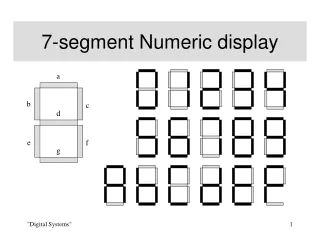
a f b g e c d 7-Segment Display a b c d e f g 0 1 1 1 1 1 1 0 1 0 1 1 0 0 0 0 2 1 1 0 1 1 0 1 3 1 1 1 1 0 0 1 4 0 1 1 0 0 1 1 5 1 0 1 1 0 1 1 6 1 0 1 1 1 1 1 7 1 1 1 0 0 0 0
a f b g e c d 7-Segment Display a b c d e f g 8 1 1 1 1 1 1 1 9 1 1 1 1 0 1 1 A 1 1 1 0 1 1 1 b 0 0 1 1 1 1 1 C 1 0 0 1 1 1 0 d 0 1 1 1 1 0 1 E 1 0 0 1 1 1 1 F 1 0 0 0 1 1 1
D1 & !D0 D3 & D2 !D2 & !D0 D3 & D1 K-Map for Segment e e = D3 & D2 # !D2 & !D0 # D3 & D1 # D1 & !D0 D1 D0 00 01 11 10 D3 D2 00 1 1 01 1 11 1 1 1 1 10 1 1 1
Makes this module available in higher-level modules hex7seg.abl MODULE hex7seg INTERFACE ([D3..D0] -> [a,b,c,d,e,f,g]); TITLE 'hex to seven segment display decoder' " a " --- hex-to-seven-segment decoder " f| g |b " --- " e| d |c " --- DECLARATIONS " Input Pins " D3..D0 PIN; D = [D3..D0]; " 4-bit input vector " Output Pins " [a,b,c,d,e,f,g] PIN ISTYPE 'com'; " 7-segment LED display segs = [a,b,c,d,e,f,g];
hex7seg.abl (cont.) HEX @radix 16; EQUATIONS when (D == 0) then segs = 7E; when (D == 1) then segs = 30; when (D == 2) then segs = 6D; when (D == 3) then segs = 79; when (D == 4) then segs = 33; when (D == 5) then segs = 5B; when (D == 6) then segs = 5F; when (D == 7) then segs = 70; when (D == 8) then segs = 7F; when (D == 9) then segs = 7B; when (D == 0A) then segs = 77; when (D == 0B) then segs = 1F; when (D == 0C) then segs = 4E; when (D == 0D) then segs = 3D; when (D == 0E) then segs = 4F; when (D == 0F) then segs = 47; END hex7seg a b c d e f g 0 1 1 1 1 1 1 0 1 0 1 1 0 0 0 0 2 1 1 0 1 1 0 1 3 1 1 1 1 0 0 1 4 0 1 1 0 0 1 1 5 1 0 1 1 0 1 1 6 1 0 1 1 1 1 1 7 1 1 1 0 0 0 0 8 1 1 1 1 1 1 1 9 1 1 1 1 0 1 1 A 1 1 1 0 1 1 1 b 0 0 1 1 1 1 1 C 1 0 0 1 1 1 0 d 0 1 1 1 1 0 1 E 1 0 0 1 1 1 1 F 1 0 0 0 1 1 1
ON,OFF = 1,0; " for common cathode LEDs @radix 16; EQUATIONS "[ a , b , c , d , e , f , g ] when (D == 0) then segs = [ ON, ON, ON, ON, ON, ON, OFF]; when (D == 1) then segs = [OFF, ON, ON, OFF,OFF,OFF,OFF]; when (D == 2) then segs = [ ON, ON, OFF,ON, ON, OFF, ON]; when (D == 3) then segs = [ ON, ON, ON, ON, OFF,OFF, ON]; when (D == 4) then segs = [OFF, ON, ON, OFF,OFF,ON, ON]; when (D == 5) then segs = [ ON, OFF,ON, ON, OFF,ON, ON]; when (D == 6) then segs = [ ON, OFF,ON, ON, ON, ON, ON]; when (D == 7) then segs = [ ON, ON, ON, OFF,OFF,OFF,OFF]; when (D == 8) then segs = [ ON, ON, ON, ON, ON, ON, ON]; when (D == 9) then segs = [ ON, ON, ON, ON, OFF,ON, ON]; when (D == 0A) then segs = [ ON, ON, ON, OFF,ON, ON, ON]; when (D == 0B) then segs = [OFF, OFF,ON, ON, ON, ON, ON]; when (D == 0C) then segs = [ ON, OFF,OFF,ON, ON, ON, OFF]; when (D == 0D) then segs = [OFF, ON, ON, ON, ON, OFF, ON]; when (D == 0E) then segs = [ ON, OFF,OFF,ON, ON, ON, ON]; when (D == 0F) then segs = [ ON, OFF,OFF,OFF,ON, ON, ON]; END hex7seg Alternate form of EQUATIONS
Compiled Equations a = (D0 & D2 & !D3 # !D1 & !D2 & D3 # !D0 & !D2 # D1 & !D3 # !D0 & D3 # D1 & D2); b = (D0 & D1 & !D3 # D0 & !D1 & D3 # !D0 & !D1 & !D3 # !D0 & !D2 # !D2 & !D3); c = (D2 & !D3 # !D2 & D3 # D0 & !D1 # !D1 & !D2 # D0 & !D2); Note they are reduced
Compiled Equations (cont.) d = (D1 & !D2 & !D3 # D0 & !D1 & D2 # !D0 & D1 & D2 # D0 & !D2 & D3 # !D0 & !D1 & !D2 # !D1 & D3); e = (!D0 & !D2 # D2 & D3 # !D0 & D1 # D1 & D3); f = (!D1 & D2 & !D3 # !D2 & D3 # !D0 & !D1 # !D0 & D2 # D1 & D3); g = (!D1 & D2 & !D3 # D1 & !D2 # !D0 & D1 # !D2 & D3 # D0 & D3); Note that d is NOT completely reduced Make Karnaugh map for d
EQUATIONS @radix 16; truth_table (D -> [ a , b , c , d , e , f , g ]) 0 -> [ ON, ON, ON, ON, ON, ON, OFF]; 1 -> [OFF, ON, ON, OFF, OFF, OFF, OFF]; 2 -> [ ON, ON, OFF, ON, ON, OFF, ON]; 3 -> [ ON, ON, ON, ON, OFF, OFF, ON]; 4 -> [OFF, ON, ON, OFF, OFF, ON, ON]; 5 -> [ ON, OFF, ON, ON, OFF, ON, ON]; 6 -> [ ON, OFF, ON, ON, ON, ON, ON]; 7 -> [ ON, ON, ON, OFF, OFF, OFF, OFF]; 8 -> [ ON, ON, ON, ON, ON, ON, ON]; 9 -> [ ON, ON, ON, ON, OFF, ON, ON]; 0A -> [ ON, ON, ON, OFF, ON, ON, ON]; 0B -> [OFF, OFF, ON, ON, ON, ON, ON]; 0C -> [ ON, OFF, OFF, ON, ON, ON, OFF]; 0D -> [OFF, ON, ON, ON, ON, OFF, ON]; 0E -> [ ON, OFF, OFF, ON, ON, ON, ON]; 0F -> [ ON, OFF, OFF, OFF, ON, ON, ON]; END hex7seg Another alternate form of EQUATIONS
a = (D3 & D2 & D1 & D0 # !D3 & D2 & D1 & D0 # !D3 & !D2 & D1 & D0 # !D3 & D2 & !D1 & D0 # D3 & !D2 & !D1 & D0 # D3 & D2 & D1 & !D0 # !D3 & D2 & D1 & !D0 # D3 & !D2 & D1 & !D0 # !D3 & !D2 & D1 & !D0 # D3 & D2 & !D1 & !D0 # D3 & !D2 & !D1 & !D0 # !D3 & !D2 & !D1 & !D0); b = (!D3 & D2 & D1 & D0 # !D3 & !D2 & D1 & D0 # D3 & D2 & !D1 & D0 # D3 & !D2 & !D1 & D0 # !D3 & !D2 & !D1 & D0 # D3 & !D2 & D1 & !D0 # !D3 & !D2 & D1 & !D0 # !D3 & D2 & !D1 & !D0 # D3 & !D2 & !D1 & !D0 # !D3 & !D2 & !D1 & !D0); Compiled Equations Note they are NOT reduced Sum of all minterms
c = (!D3 & D2 & D1 & D0 # D3 & !D2 & D1 & D0 # !D3 & !D2 & D1 & D0 # D3 & D2 & !D1 & D0 # !D3 & D2 & !D1 & D0 # D3 & !D2 & !D1 & D0 # !D3 & !D2 & !D1 & D0 # !D3 & D2 & D1 & !D0 # D3 & !D2 & D1 & !D0 # !D3 & D2 & !D1 & !D0 # D3 & !D2 & !D1 & !D0 # !D3 & !D2 & !D1 & !D0); d = (D3 & !D2 & D1 & D0 # !D3 & !D2 & D1 & D0 # D3 & D2 & !D1 & D0 # !D3 & D2 & !D1 & D0 # D3 & !D2 & !D1 & D0 # D3 & D2 & D1 & !D0 # !D3 & D2 & D1 & !D0 # !D3 & !D2 & D1 & !D0 # D3 & D2 & !D1 & !D0 # D3 & !D2 & !D1 & !D0 # !D3 & !D2 & !D1 & !D0);
e = (D3 & D2 & D1 & D0 # D3 & !D2 & D1 & D0 # D3 & D2 & !D1 & D0 # D3 & D2 & D1 & !D0 # !D3 & D2 & D1 & !D0 # D3 & !D2 & D1 & !D0 # !D3 & !D2 & D1 & !D0 # D3 & D2 & !D1 & !D0 # D3 & !D2 & !D1 & !D0 # !D3 & !D2 & !D1 & !D0); f = (D3 & D2 & D1 & D0 # D3 & !D2 & D1 & D0 # !D3 & D2 & !D1 & D0 # D3 & !D2 & !D1 & D0 # D3 & D2 & D1 & !D0 # !D3 & D2 & D1 & !D0 # D3 & !D2 & D1 & !D0 # D3 & D2 & !D1 & !D0 # !D3 & D2 & !D1 & !D0 # D3 & !D2 & !D1 & !D0 # !D3 & !D2 & !D1 & !D0);
g = (D3 & D2 & D1 & D0 # D3 & !D2 & D1 & D0 # !D3 & !D2 & D1 & D0 # D3 & D2 & !D1 & D0 # !D3 & D2 & !D1 & D0 # D3 & !D2 & !D1 & D0 # D3 & D2 & D1 & !D0 # !D3 & D2 & D1 & !D0 # D3 & !D2 & D1 & !D0 # !D3 & !D2 & D1 & !D0 # !D3 & D2 & !D1 & !D0 # D3 & !D2 & !D1 & !D0);
MODULE main7seg TITLE 'hex to seven segment display decoder' DECLARATIONS hex7seg INTERFACE([D3..D0] -> [a,b,c,d,e,f,g]); d7L FUNCTIONAL_BLOCK hex7seg; d7R FUNCTIONAL_BLOCK hex7seg; " Input Pins " L3..L0 PIN 11,7,6,5; " Left Switches S6 - 1..4 L = [L3..L0]; " 4-bit input vector R3..R0 PIN 4,3,2,1; " Right Switches S7 - 1..4 R = [R3..R0]; " 4-bit input vector
" Output Pins " [aa,bb,cc,dd,ee,ff,gg] PIN 57,58,61,62,63,65,66 ISTYPE 'com'; "Leftmost (tens) 7-segment LED display [a,b,c,d,e,f,g] PIN 15,18,23,21,19,14,17 ISTYPE 'com'; " Rightmost (units) 7-segment LED display EQUATIONS [aa,bb,cc,dd,ee,ff,gg] = d7L.[a,b,c,d,e,f,g]; d7L.[D3..D0] = L; [a,b,c,d,e,f,g] = d7R.[a,b,c,d,e,f,g]; d7R.[D3..D0] = R; END main7seg