Download
1 / 14
140 likes | 282 Views
The Delmarva Fox Squirrel, or Sciurus niger cinereus, is a unique mammal found on the Delmarva Peninsula. Characterized by a steely grey coat with a white belly, this squirrel can grow up to 30 inches long and weigh up to 3 lbs. It inhabits mature forests, favoring closed canopies and open understories. With a diet focused on nuts, seeds, and fruits, it plays a crucial role in its ecosystem. Once near extinction, conservation efforts have increased its population since being listed as endangered in 1967, highlighting the importance of habitat protection.

E N D
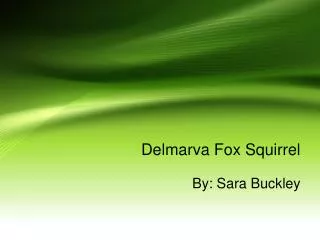
Delmarva Fox Squirrel By: Sara Buckley
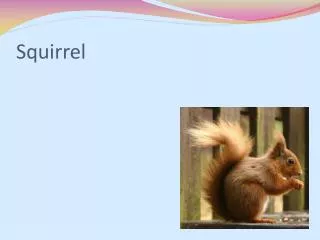
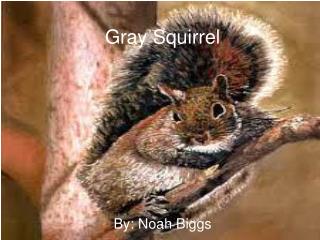
Delmarva Fox Squirrel • Sciurus niger cinereus • Steely grey with white belly • Black edges on tail • Up to 30in long • Up to 3lbs
Habitat • Mature forests • Hardwood and pine mixtures • Closed canopy • Open understory • Decidious swamps close to pine woodlands
Diet • Nuts and seeds • Farm fields • Buds and flowers • Fungi • Insects • Fruit • Mature green pine cones
Behaviour • Quieter than Grey Squirrel • Prefers open spaces • Traverses forest floor • Avoids confrontation • Active year round
Distribution • Small isolated populations on Delmarva Penisula • Average home range of 40 acres
Reproduction • 44-45 day gestation • 1-7 kits per litter • Mating season- late winter, early spring • Up to two litters a year • Reaches sexual maturity at one year • Likes to nest in hollow trees
History • Historically found from southern New Jersey to southeast Pennsylvania • By early 1900s, only found in 4 counties in east Maryland • Listed as endangered in 1967 • Given protection under Endangered Species Act
Status • Federal- Endangered • Delaware- Endangered • Sussex County, DE- Experimental Population, Non-Essential
Cause for listing • Deforestation • Agricultural development • Timber industry • Forced to compete with grey squirrels
Predators • Humans • Red foxes • Minks • Weasels • Raptors • Dogs • Cats • Racoons • Opossums • Rat Snakes • Cars
Conservation • Habitat protection began in 1945 • Hunting banned in 1971 • Closely monitored populations • Breed and release (11 of 16 successful) • Educate the public • Farmers leave uncut crops for squirrels • Artificial den boxes
Impact if eliminated • Loss of food source • Loss of seed spreading
References • http://www.raywilsonbirdphotography.co.uk/Galleries/Mammals/Delmarva%20Fox%20Squirrel.html • http://www.wildlifeadvocacy.org/programs/fox_squirrel.html • http://www.fs.fed.us/database/feis/animals/mammal/scni/all.html#21 • http://www.fws.gov/endangered/esa-library/pdf/squirrel.pdf • http://ecos.fws.gov/roar/pub/planImplementationStatus.action?documentId=600097&entityId=10 • http://ecos.fws.gov/speciesProfile/profile/speciesProfile.action?spcode=A00B#lifeHistory • http://www.chesapeakebay.net/fieldguide/critter/delmarva_fox_squirrel