Download

1 / 3
0 likes | 8 Views
IPSC targets can be engaged utilizing different shooting stances, consisting of isosceles, Weaver, or modified Weaver, enabling shooters to discover the most comfortable and effective position for them

E N D
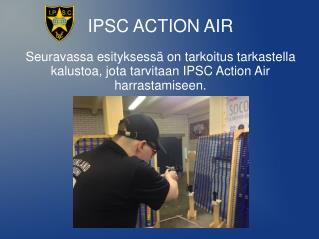
Introduction In the world of IPSC (Worldwide Practical Shooting Confederation) competition, the function of targets can not be undervalued. They play an essential part in figuring out the success or failure of a shooter's efficiency. But have you ever wondered what makes sure IPSC competitors targets more effective than others? What is the psychology behind creating targets that not only challenge shooters but also improve their abilities? In this short article, we will delve into the intricacies of the psychology behind effective IPSC competitors targets and check out how they can affect a shooter's performance. The Significance of IPSC Targets IPSC is a demanding sport that requires precision, speed, and accuracy. It challenges shooters to engage with dynamic situations that mimic real-life situations. The targets used in IPSC competitions are created to simulate potential hazards or challenges that shooters may encounter in real-world situations. These targets are not just fixed objects; they are interactive and need shooters to make split-second decisions. The psychology behind successful IPSC competitors targets depends on their ability to stimulate specific responses from shooters. These reactions can range from target acquisition and identification to decision-making and shot positioning. Each aspect plays a considerable role in figuring out a shooter's success during an IPSC competition. Understanding the Shooter's Perspective To produce effective IPSC competition targets, it is vital to comprehend the mental aspects that affect a shooter's performance. By understanding these elements, target designers can create obstacles that press shooters to carry out at their best. Mental Focus and Reaction Time One of the crucial psychological consider shooting sports is mental focus. Maintaining focus amidst interruptions is important for success in IPSC competitors. Targets that demand fast responses require shooters to remain psychologically sharp and make split-second decisions under pressure. Decision-Making Under Stress IPSC competitions often involve high-stress scenarios where shooters should make critical choices quickly. Successful targets ought to reproduce these circumstances and challenge shooters to believe and react rapidly. By developing targets that mimic real-world circumstances, shooters can practice decision-making under stress and enhance their overall performance. Visual Perception and Target Acquisition The capability to rapidly obtain targets is another important aspect of effective IPSC competitors targets. Shooters need to be able to recognize and engage targets accurately and effectively. Targets that are created to check visual understanding and target acquisition abilities can assist shooters establish these important abilities. The Role of IPSC Action Air Targets IPSC Action Air is a variant of IPSC competitors that utilizes airsoft guns instead of traditional guns. While the main focus is on fun and training, the psychology behind effective IPSC Action Air targets remains the exact same. These targets should challenge shooters mentally, physically, and emotionally. Mental Challenges Successful IPSC Action Air targets ought to provide mental difficulties that need quick decision-making and analytical skills. By including elements such as several target engagements, hostage scenarios, or shoot/no-shoot circumstances, these targets push shooters to think under pressure.
Physical Challenges IPSC Action Air targets must also offer physical difficulties that test a shooter's dexterity, speed, and accuracy. Targets that require shooters to move while engaging or engage from unconventional shooting positions can improve a shooter's physical abilities. Emotional Engagement Emotional engagement is an essential element of effective IPSC Action Air targets. By mimicing real-life situations that stimulate emotions such as worry, stress, or enjoyment, these targets develop a more immersive experience for shooters. This emotional engagement can contribute to better mental preparation for real-world shooting situations. IPSC Equipment and Equipment for Effective Competition While the psychology behind effective IPSC competition targets is essential, the gear and equipment used by shooters also play a considerable role in their performance. Let's explore some necessary equipment and equipment that can improve a shooter's success in IPSC competitions. IPSC Premium Targets Using high-quality IPSC premium targets can substantially impact a shooter's performance. These targets are designed to hold up against repeated hits and provide clear visual feedback when shot. Their durability makes sure that shooters can practice thoroughly without worrying about target damage. IPSC Range Equipment The variety equipment used in IPSC competitors is similarly important for success. From shooting bays and barricades to props and cover, the variety devices should replicate real-life circumstances as closely as possible. This permits shooters to practice in an environment that closely looks like the difficulties they may face in real situations. IPSC Range Targets IPSC range targets need to supply a variety of obstacles for shooters. Different shapes, sizes, and engagement ranges can check a shooter's precision, precision, and decision-making abilities. By providing a varied variety of targets, shooters can develop a well-rounded capability that translates into success during competitions. FAQs Q: What makes IPSC competition targets successful? A: Effective IPSC competitors targets challenge shooters psychologically, physically, and emotionally. They need quick decision-making, problem-solving abilities, and need dexterity, speed, and precision from shooters. Q: How do IPSC Action Air targets vary from traditional IPSC targets? A: While both kinds of targets intend to challenge shooters, IPSC Action Air targets usage airsoft weapons instead of standard guns. They provide psychological obstacles, physical obstacles, and create emotional engagement for an immersive shooting experience. Q: Why is psychological focus important in IPSC competitions? A: Mental focus is important in IPSC competitors due to the fact that it allows shooters to keep concentration amidst distractions. It allows them to make split-second choices accurately and efficiently. Q: What role does visual understanding play in effective IPSC competition targets?
A: Visual perception plays a substantial role in effective IPSC competition targets as it enables shooters to quickly obtain and engage targets. Targets that check visual understanding abilities assist shooters establish this necessary ability. Q: How can IPSC gear and equipment enhance a shooter's success? A: IPSC gear and devices, such as exceptional targets, range devices, and range targets, add to a shooter's success by providing sturdiness, replicating real-life circumstances, and providing a varied set of difficulties for ability development. Q: Why is psychological engagement important in IPSC Action Air targets? A: Emotional engagement is necessary in IPSC Action Air targets as it simulates real-life circumstances and evokes emotions such as fear, stress, or excitement. This improves psychological preparation for real shooting situations. Conclusion The psychology behind effective high quality competition shooting targets IPSC competition targets surpasses mere aesthetics or performance. These targets are thoroughly developed to challenge shooters psychologically, physically, and emotionally. By comprehending the psychological factors that influence a shooter's performance, target designers can produce challenges that press shooters to reach their full capacity. Furthermore, the gear and equipment utilized by shooters play an important role in their success throughout IPSC competitions. By incorporating premium targets, variety devices, and range targets, shooters can improve their abilities and enhance their general performance. So the next time you step on the IPSC variety, remember that the psychology behind effective competition targets is an important part of your journey towards ending up being a successful IPSC competitor.