Download
1 / 6
60 likes | 77 Views
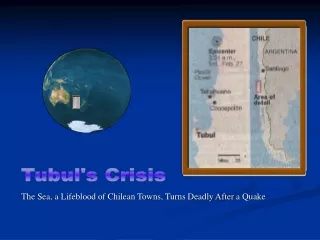
Discover how the closure and destruction of firms in Tubul, Chile, following a devastating earthquake resulted in a decline in real wage rates and labor market equilibrium. The decrease in both labor demand and labor supply, caused by the loss of population through death or relocation, further exacerbated the situation. Explore the repercussions of this crisis and its effects on the economic resources and stability in the region. Learn from "The Sea, a Lifeblood of Chilean Towns, Turns Deadly After a Quake" article published in The New York Times on March 3, 2010 and the insights from Foundations of Macroeconomics by Bade and Parkin.

E N D
Tubul's Crisis The Sea, a Lifeblood of Chilean Towns, Turns Deadly After a Quake
Tubul, Chile's Labor Market Real Wage Rate LD LS EWR Labor EQL
Tubul, Chile's Labor Market Real Wage Rate LD LS Decrease in LD - due to closure/destruction of firms in the Tubul, Chile area EQ EWR LD² Labor EQL
Tubul, Chile's Labor Market Real Wage Rate LS² LD LS Decrease in LS – decrease of population (death, relocation) in the Tubul, Chile area EWR EQ Labor EQL
Resources "The Sea, a Lifeblood of Chilean Towns, Turns Deadly After a Quake” from The New York Times: March 3, 2010 Foundations of Macroeconomics Bade and Parkin