Download
1 / 5
50 likes | 161 Views
Mergers and takeovers in organizations present unique challenges, especially in reconciling differing cultures and histories. Successful integration requires acknowledging these differences while developing a cohesive approach. Key steps include establishing a unified mission statement, integrating services and policies, and reorganizing command structures. Internal cultural changes are influenced by external factors such as shifting demographics and resource limitations. Understanding pitfalls like agency size and union concerns can guide effective management, ensuring a smoother transition and alignment of goals.

E N D
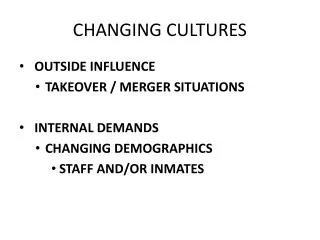
CHANGING CULTURES • OUTSIDE INFLUENCE • TAKEOVER / MERGER SITUATIONS • INTERNAL DEMANDS • CHANGING DEMOGRAPHICS • STAFF AND/OR INMATES
Takeover / Merger • Separate histories and cultures - need to respect each • Only one culture has to develop, over time - cannot have two philosophical approaches - issue relates to management needs • One has to become part of the other, initially - creates fear and tension • Start with a combined Mission Statement
Takeover / Merger • Integration of services - central office functions; IT; research, etc. • Integration of policies and procedures - separate for institutions and field • Reorganization of chain of command - cannot have a parallel command structure • Establish implementation goals and schedule - cannot rush the merger
Internal Cultural Changes • Offender demographics • Less non-violent, more violent • More sex offenders, more mentally ill • Research based program changed • High, medium and low risk analysis • Program decisions based on needs • Fiscal limitations - Managing limited resources
PITFALLS & PROBLEMS • Lack of understanding of other agency • Size of agencies • Union concerns and attitudes • Expectations by legislature and governor • Explaining new rules and decisions • Low level needs get less direct treatment • Cannot be held against them by Parole Board or established early release authorizations