Download
1 / 3
30 likes | 145 Views
The execution of civil judgments in environmental cases in Thailand faces significant challenges, including time consumption, involvement of numerous wrongdoers, and political influences. The revocation of by-laws and the compensation process for executing officers can be complex. State properties are typically exempt, making cleanup efforts financially burdensome. Coordination on cross-border issues is lacking, raising concerns about bankruptcy risks in the private sector. This discussion highlights the need for improved cooperation, recognition of foreign judgments, and the exploration of alternatives like compensation funds and arbitration as effective solutions.

E N D
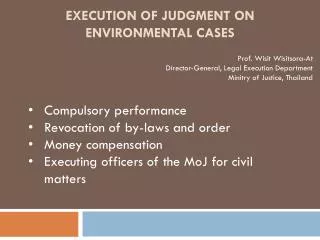
Prof. WisitWisitsora-At Director-General, Legal Execution Department Minitry of Justice, Thailand Compulsory performance Revocation of by-laws and order Money compensation Executing officers of the MoJ for civil matters Execution of Judgment on environmental cases
Time-consuming Matters sometimes involve a large group of wrong-doers and become politicized State properties are exempted Cleaning up requires a large sum of money Risk of private sector involved May be bankrupt No real coordination on cross-border matter Challenges
Execution should only be used as last resort Schemes such as compensation funds or compulsory usage of specific insurance policies Better equipped cooperation on cross-border issues Recognition of foreign judgments? Arbitration? Suggestion