Download

1 / 7
0 likes | 3 Views
Choosing the right medical specialty is a major step in your medical career. Reflect on your interests, strengths, and the kind of patients and work you enjoy. Consider factors like lifestyle, training length, income, job demand, and competition. Think about how different specialties align with your personal and professional goals. Explore your options thoroughly, speak to mentors, and be honest with yourself. Thereu2019s no perfect specialtyu2014just the one that fits you best. Take your time and make an informed decision.

E N D
HOW TO CHOOSE THE RIGHT MEDICAL SPECIALTY medicshub.co
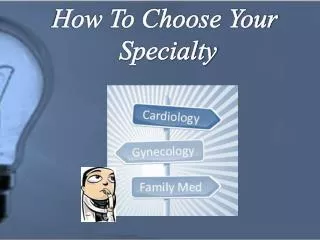
How to Choose the Right Medical Specialty is one of the most important steps in your journey as a future doctor. With so many career options in the medical field, it's normal to feel unsure. Your choice will impact your work-life balance, income, and long-term satisfaction. That’s why it’s essential to take your time, reflect, and gather the right information before making a decision.
FOLLOW YOUR INTERESTS AND STRENGTHS The best starting point in learning how to choose the right medical specialty is looking inward. What excites you during your clinical rotations? Do you enjoy working with kids, elderly patients, or adults? Are you more drawn to hands-on procedures or in-depth thinking and problem-solving? For example, if you like fast-paced, action-heavy settings, emergency medicine or surgery might suit you. If you enjoy deep conversations and helping people manage long-term conditions, internal medicine or psychiatry could be a better match. Your natural talents and interests should guide your path.
Consider Work-Life Balance Every specialty has a different lifestyle. Some have predictable hours with little emergency work, while others involve night shifts, long surgeries, or being on call. Think about how your future work hours will affect your family life, hobbies, and overall happiness. When asking yourself how to choose the right medical specialty, think about what kind of daily routine you want. Would you prefer shift work like in emergency medicine, or a more traditional 9-to-5 schedule like in dermatology or outpatient family medicine?
Lookat Career Demandand Job Opportunities Another important part of deciding how to choose the right medical specialty is looking at job availability and long-term demand. Some fields are growing fast due to aging populations or new technologies, while others may be more competitive or limited by location. If you dream of living in a certain city or region, check if your chosen specialty has strong job opportunities there. Also, look into whether the field allows for roles beyond clinical work—such as teaching, research, or working with healthcare technology.
Think About Financial Factors While money shouldn't be the only reason behind your choice, it’s practical to think about your future earnings and debt. Different specialties offer different income levels, which can affect how fast you repay student loans or achieve financial stability. Specialties that require longer training may delay your income but offer higher pay later. When deciding how to choose the right medical specialty, balance your passion with your financial goals and be realistic about the time investment.
Conclusion In the end, how to choose the right medical specialty comes down to understanding yourself—your interests, values, and goals. There’s no single perfect specialty, but there is one that fits you better than the rest. Talk to mentors, reflect on your clinical experiences, and research each path thoroughly.